

Overview
What is a common effluent treatment plant?
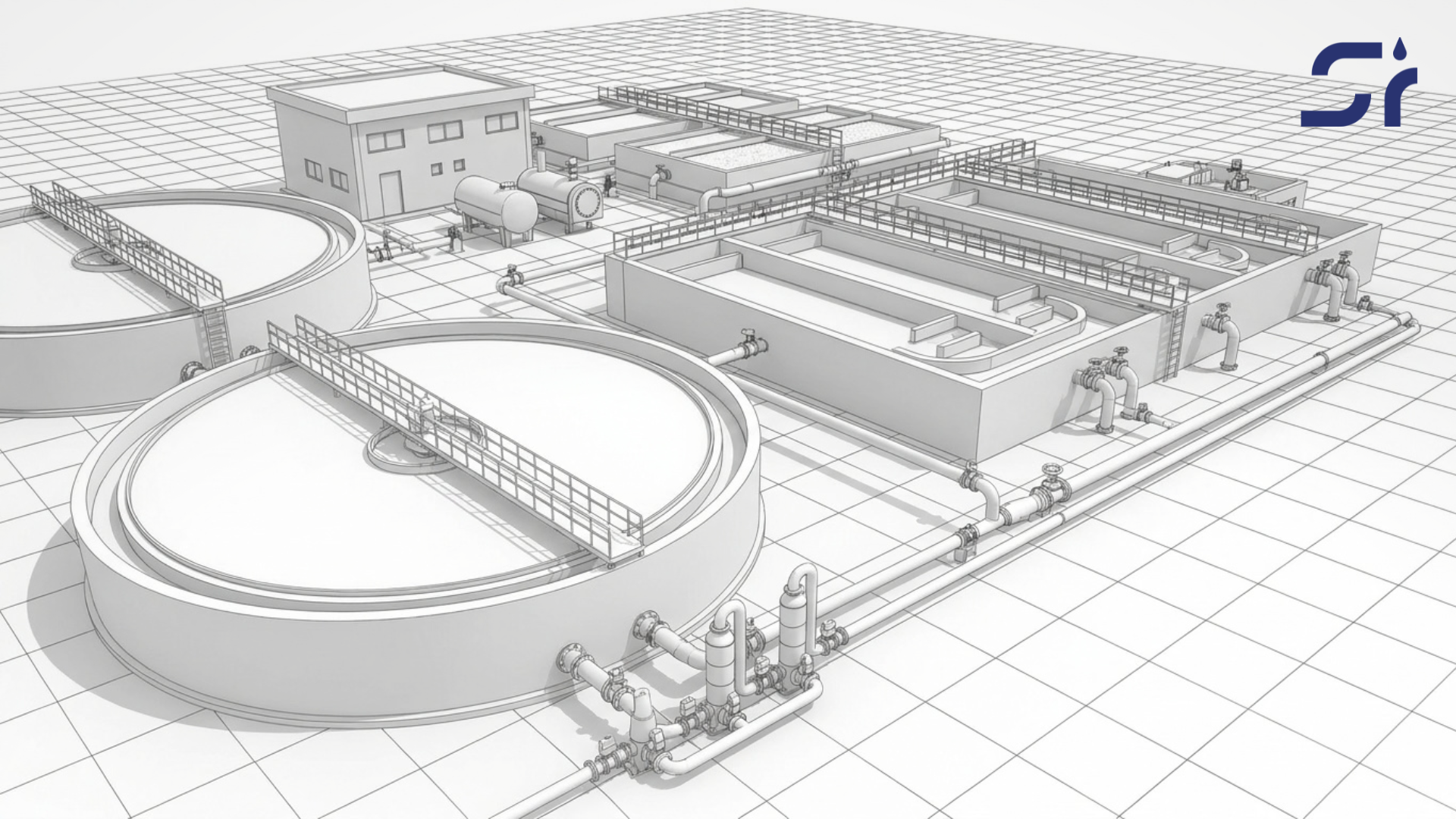
A CETP treats the combined effluent from many small and medium industrial units, such as textile, dyeing, pharma, tannery and metal-finishing units in one estate. Each unit pre-treats to an agreed inlet limit, and the shared plant treats the blend to the discharge or reuse standard in its consent.
- Shared capital and running cost across member units
- One plant to monitor and maintain, instead of many small ones
- Compliance depends on both the plant and the discipline of its members
ETP vs CETP
What is different about a common plant?
| ETP | CETP | |
|---|---|---|
| Serves | One industrial unit | Many units in an estate or cluster |
| Inlet | Known process effluent | Blend that changes by hour, shift and member |
| Responsibility | The unit | The CETP operator and each member for its own inlet quality |
| Cost | Borne by one unit | Shared among members |
| Main risk | Process upsets | Shock loads, toxic or high-TDS discharges, unequal contribution |
| Typical fix | Tune or upgrade the plant | Control the inlet, then upgrade stages |
Treatment train
How a CETP works
Stages vary with the member industries. This is the common sequence.
Collection and equalisation
Member effluent is screened and blended in an equalisation tank so load and pH peaks are smoothed before treatment.
Primary treatment
Neutralisation, coagulation, flocculation and clarification remove suspended solids, colour and part of the organic load.
Biological treatment
Activated sludge, SBR or MBBR reduces BOD and COD. Toxic or high-salt inlets are the usual reason this stage fails.
Tertiary treatment
Filtration, activated carbon, ozone or UF polishes the water for tighter limits or reuse.
Membranes and evaporation, where ZLD applies
RO recovers water, and concentrated reject goes to evaporation and drying. Solid salts leave the site, no liquid does.
Sludge handling
Sludge is thickened and dewatered, then sent to an authorised disposal route.
Compliance
Why CETPs struggle to comply
Flow and strength change with member production, so the biological stage never reaches steady state.
One unit discharging high TDS, oil or toxic compounds can upset the whole plant.
Biology and conventional treatment do not remove TDS. Reuse or ZLD needs membranes.
The general standards for inland surface water list BOD 30, COD 250 and TSS 100 mg/L. Your State Pollution Control Board consent, or a sector rule, can be stricter.
Upgrade routes
Three ways to upgrade a CETP
Stabilise
For plants that swing in and out of compliance
- Equalisation and inlet monitoring
- Process audit of each stage
- Operating changes and O&M support
Tighten the outlet
For plants facing stricter limits or reuse
- Tertiary treatment: filtration, carbon, UF
- Colour and COD polishing
- Online effluent monitoring
Zero liquid discharge
For plants with TDS, reuse or no-discharge rules
- RO and concentrate treatment
- Evaporation and drying
- Water returned to member units
Running a CETP?
Tell us what is going wrong and we will call you.
Thank you.
We have received your enquiry. Our team will contact you to discuss your plant and the next steps.
Prefer to talk first? WhatsApp us
Our approach
Study first, then invest
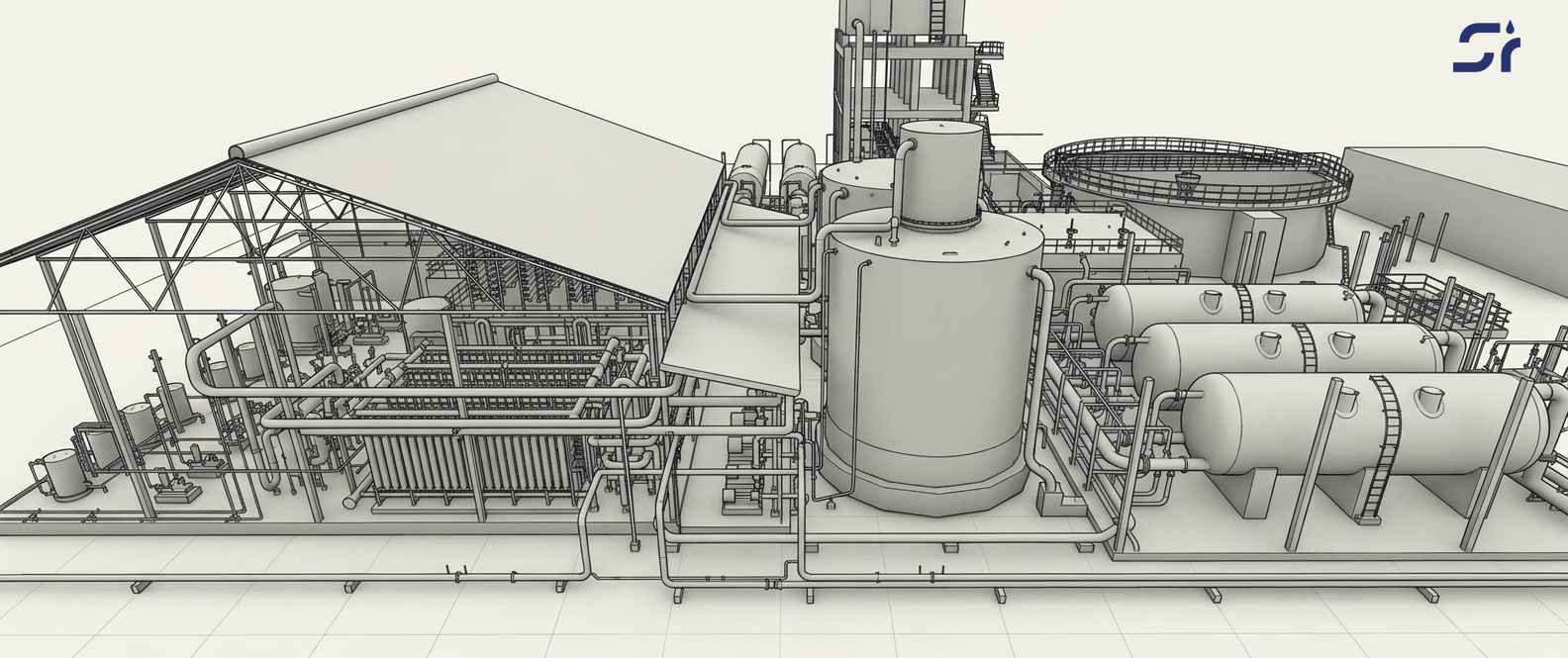
The Treatability Study™ tests your actual effluent before any large commitment.
Treatability Study™
Evidence before capital
Each stage informs the next. Further investment is recommended only where the findings justify it.
- Analyse the effluent and review the existing scheme
- Pilot on site where validation is needed
- Build the targeted upgrade or full plant
Where it applies
Typical member industries
Quick answers
Frequently asked questions
A Common Effluent Treatment Plant (CETP) is a shared plant that treats the effluent from many small and medium industrial units in an estate or cluster. Member units pre-treat to an agreed inlet standard and send their effluent to the CETP, which treats it to the discharge or reuse standard in its consent.
An ETP serves one industrial unit and that unit is responsible for its performance. A CETP serves many units, so its inlet load and composition vary, the cost is shared, and compliance depends on every member keeping to the inlet limits as well as on the plant itself.
Members pre-treat to the CETP inlet limits, the CETP equalises the combined flow, then treats it with physico-chemical and biological stages and, where required, tertiary treatment. The treated water must meet the limits in the CETP consent from the State Pollution Control Board. The general standards for inland surface water list BOD 30 mg/L, COD 250 mg/L and TSS 100 mg/L, and sector, state or consent limits can be stricter.
The usual causes are variable inlet load, members discharging above the inlet limits, high dissolved solids, ageing equipment, limited funds for upgrades and sludge that is expensive to dispose of. An audit of inlet quality and of each treatment stage shows which of these applies.
Often yes. Typical upgrades are better equalisation and inlet monitoring, a stronger primary or biological stage, a tertiary treatment plant, and a membrane and evaporation section for ZLD. A treatability study on the actual effluent shows which of these will help and by how much.
The consent conditions, design and actual flow, inlet and outlet analysis over several weeks, the process flow diagram, equipment details, sludge quantity and disposal route, and the main recurring problems. Member unit types and their share of the flow also help.
SR Paryavaran supplies effluent treatment, tertiary treatment, membrane and ZLD systems and operation and maintenance services for industrial wastewater. The scope for a CETP is set after a technical assessment of the effluent and the existing plant.
Could your CETP meet its limits with less effort?
Tell us what you are facing. You do not need a full technical dossier to start.
- A view on what is driving your CETP's compliance problem
- Options: stabilise, tighten the outlet, or ZLD
- Treatability Study™ scope where it is needed
- A reply from an engineer, not a sales script
Prefer to talk? Call +91-90565-26208
Request a Treatability Study™
Thank you.
We have received your enquiry. Our team will contact you to discuss your plant and the next steps.
Prefer to talk first? WhatsApp us