



Overview
Membrane-based demineralisation — continuous, chemical-free, stable
SR Paryavaran Engineers designs, manufactures and delivers ultrapure water (UPW) systems built on Reverse Osmosis and Electrodeionisation (RO + EDI) architecture — a continuous, membrane-based demineralisation approach that replaces cyclic acid-and-caustic regeneration with steady-state electrochemical ion removal.
These systems produce water at ≥16 MΩ·cm resistivity, <0.06 µS/cm conductivity and <10 ppb silica — suitable for high-pressure and supercritical boiler feed, refinery CPP makeup, pharmaceutical purified water and semiconductor process water. SRPEPL's branded boiler-feed-water configuration, GREENSTEAM™, integrates pre-treatment, RO and EDI into a single-vendor EPC scope with in-house membrane manufacturing through SRP Membranes. Systems are delivered as turnkey EPC, brownfield DM-plant retrofits, or with long-term O&M and AMC frameworks.
Applications
What is a UPW system, and when is it needed?
An ultrapure water system produces demineralised water with resistivity ≥16 MΩ·cm and silica below 10 ppb by combining Reverse Osmosis with Electrodeionisation (EDI). This level of ionic purity is required wherever even short-duration excursions in water chemistry cause cumulative, irreversible damage to process equipment — boiler tubes, turbine blades, reactor vessels and electrolyser membranes.
The Case for Replacement
Why conventional resin-based DM plants are being replaced
Conventional ion-exchange DM plants are cyclic by design — resin capacity is fixed, water quality degrades progressively as the resin approaches exhaustion, and chemical regeneration with HCl and NaOH is required to restore capacity. This cycle introduces four structural limitations that membrane-based UPW systems resolve.
Treatment Architecture
How an RO + EDI ultrapure water system works
The SRPEPL UPW treatment architecture follows a four-stage process train. Each stage serves a specific separation function, sequenced so that each downstream unit receives feed within its design envelope.
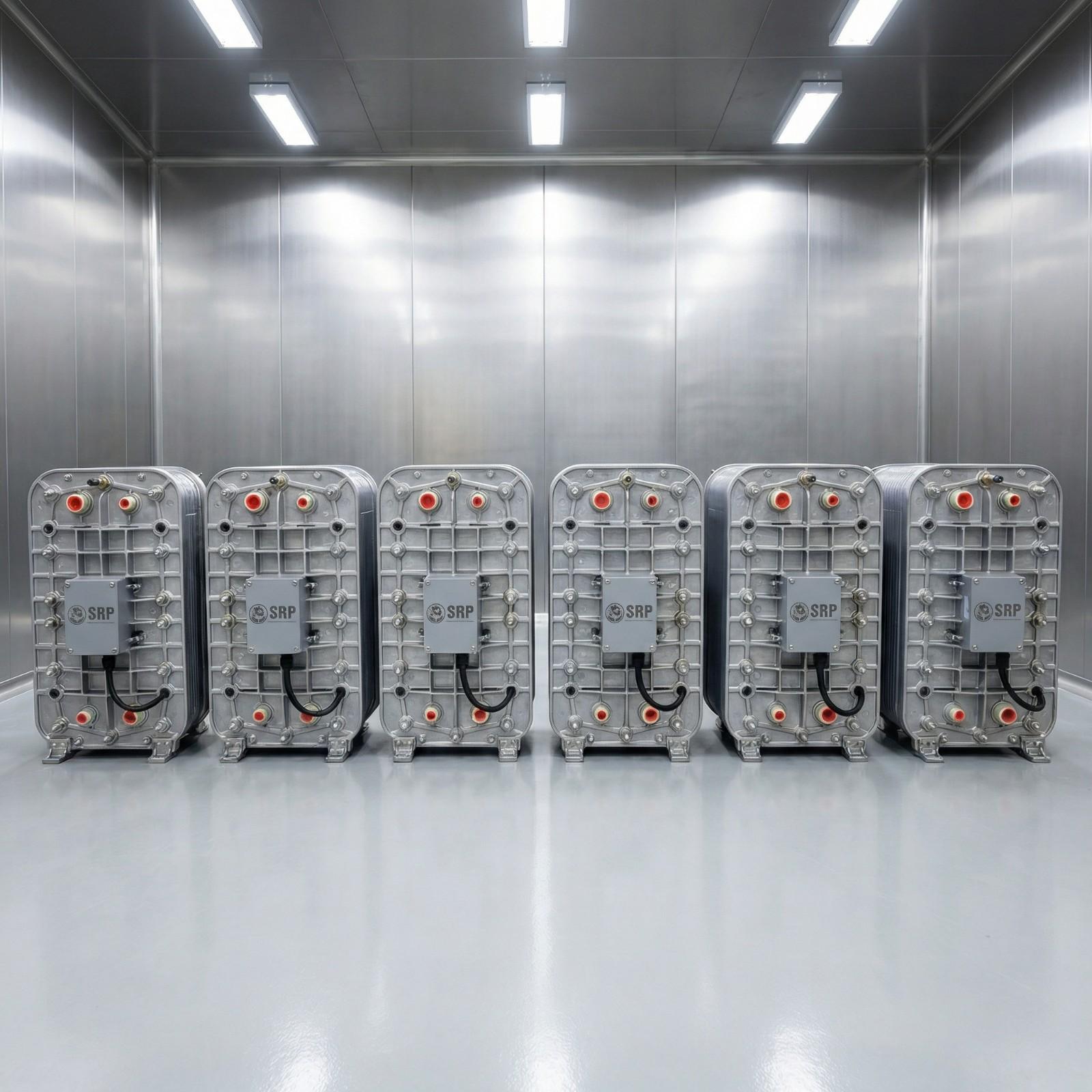
How EDI eliminates chemical regeneration
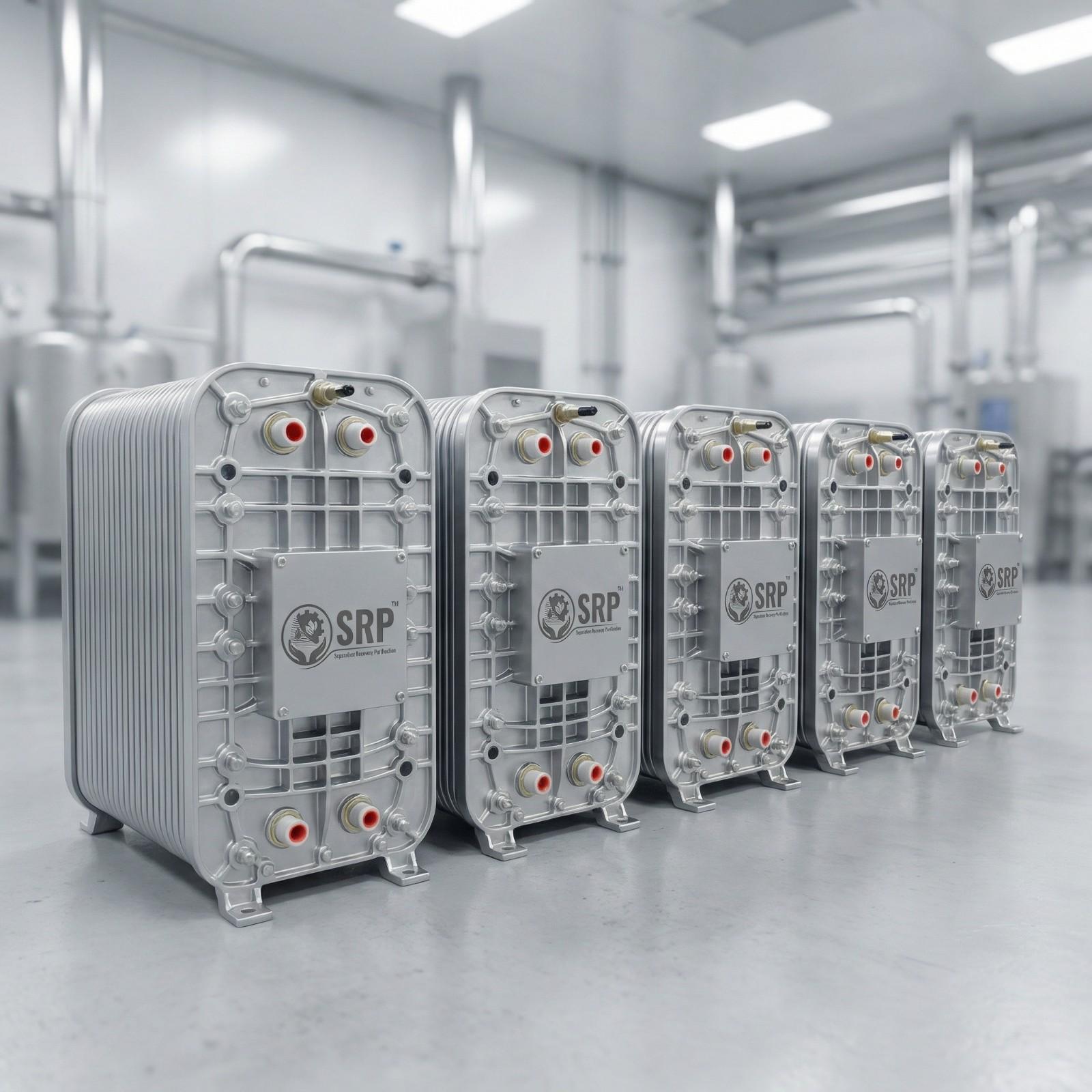
The EDI stack consists of alternating dilute and concentrate chambers separated by cation-selective and anion-selective membranes, with mixed-bed ion-exchange resin packed into the dilute chambers. As RO permeate flows through the dilute chambers, residual dissolved ions are captured by the resin and driven through the ion-selective membranes into the concentrate stream under an applied DC electric field.
Controlled water splitting at the resin–membrane interface generates H⁺ and OH⁻ ions in situ, continuously regenerating the resin without any external acid or caustic dosing. The result is steady-state, uninterrupted production of ultrapure water at ≥16 MΩ·cm resistivity.
Achievable water quality — SRPEPL RO + EDI
Brand Configuration
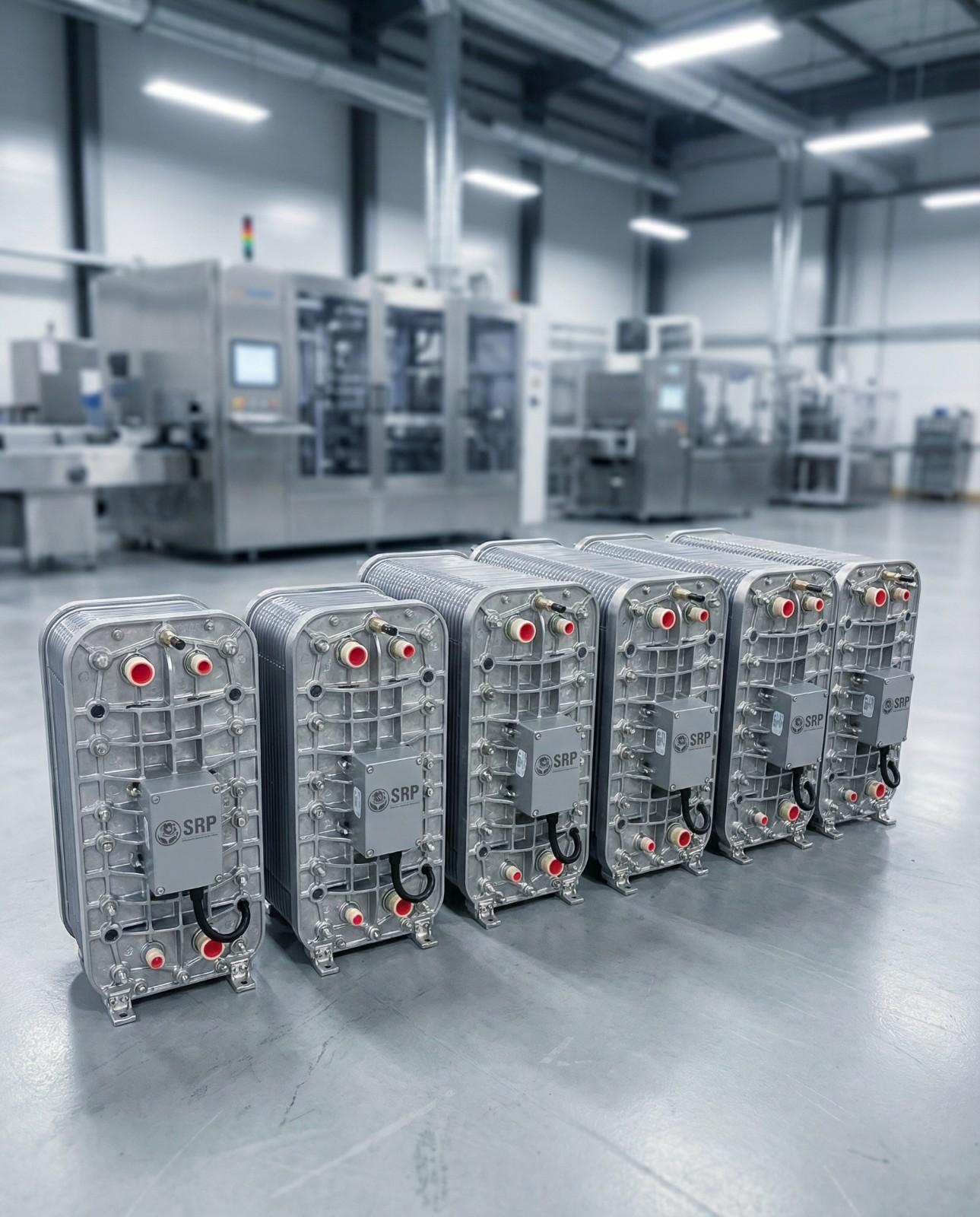
GREENSTEAM™ — chemical-free boiler feed water
for thermal power plants and CPPs
Technical Comparison
RO + EDI vs conventional resin-based DM
The comparison below reflects the structural differences between continuous electromembrane demineralisation and cyclic ion-exchange regeneration. These are design-architecture differences, not operational preferences.
| Parameter | RO + EDI — GREENSTEAM™ | Conventional IX / Resin DM |
|---|---|---|
| Mode of operation | Continuous, steady-state | Cyclic — run → exhaust → regenerate |
| Regeneration method | In-situ electrochemical — no chemicals | External acid (HCl) and caustic (NaOH) |
| Product water quality | Stable — <0.06 µS/cm, <10 ppb silica | Variable — degrades near resin exhaustion |
| Sodium / silica slip risk | Structurally eliminated under design limits | Inherent risk during end-of-run |
| Chemical storage & handling | None for regeneration | Mandatory — HCl, NaOH, neutralisation pit |
| ZLD impact | None — no regeneration wastewater produced | High-TDS regen waste 5,000–20,000 mg/L — costly to evaporate |
| Automation level | High — current / voltage controlled | Moderate — operator and timing dependent |
| Effective availability | >99% achievable | 80–90% typical (incl. regeneration downtime) |
| Manpower requirement | Lower — reduced operator intervention | Higher — regeneration supervision, chemical handling |
| High-pressure boilers ≥100 bar | Excellent — flat chemistry profile | Increasingly constrained — quality cycling |
| Supercritical boilers ≥240 bar | Designed for this duty | Not recommended without MB polisher backup |
Contract Scope
What's included in an SRPEPL UPW system
SRPEPL delivers UPW systems as a single-vendor EPC scope — process design through commissioning, trial run and performance guarantee. Brownfield DM-replacement scope is adapted to the existing installation.
Greenfield scope
Brownfield retrofit scope
Project References
SRPEPL's UPW and boiler feed water track record
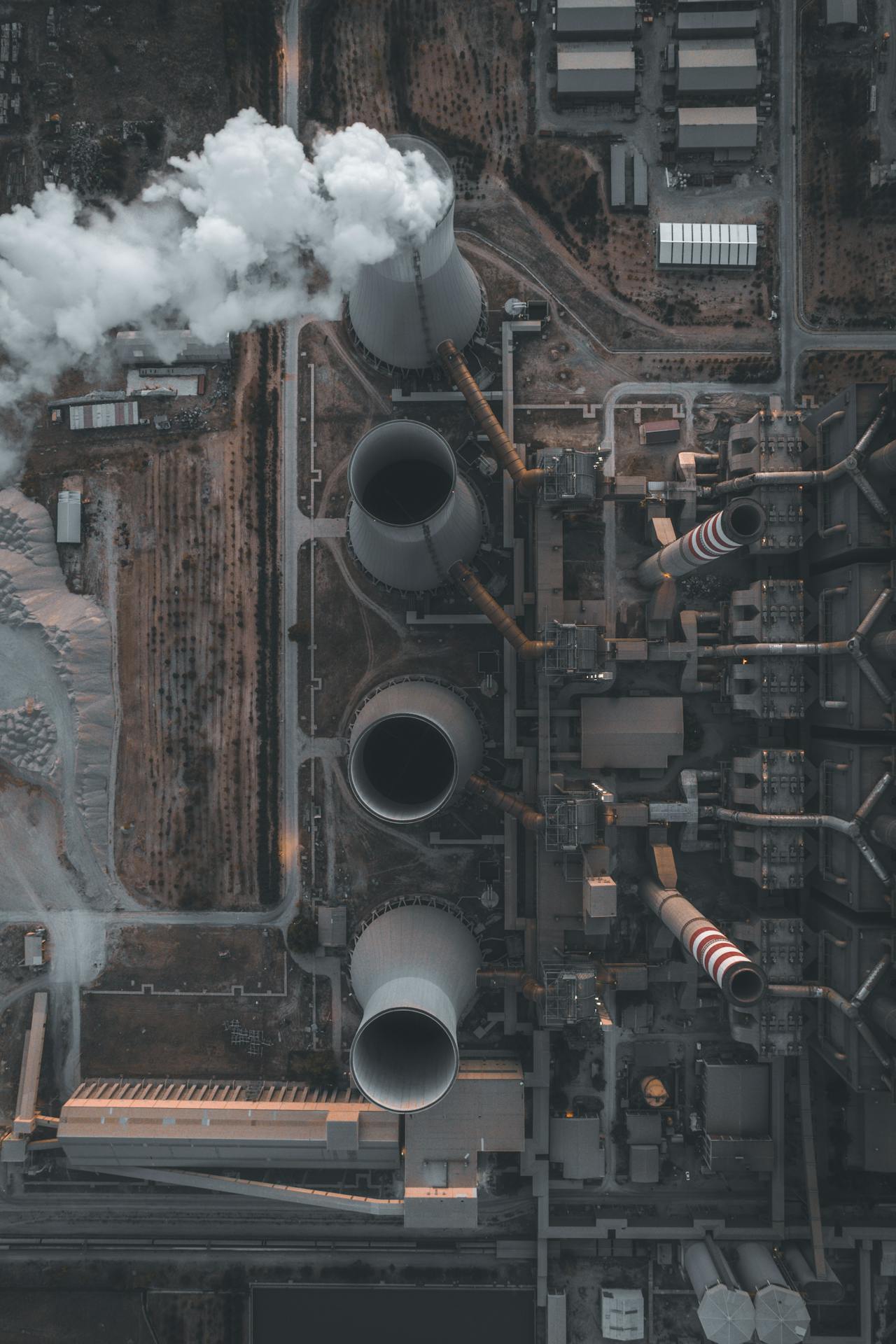
SRPEPL has delivered ultrapure water and boiler feed water systems across thermal power, refinery and industrial applications. A related reference — currently under execution — is listed below. Specific UPW project references are being confirmed for this section.
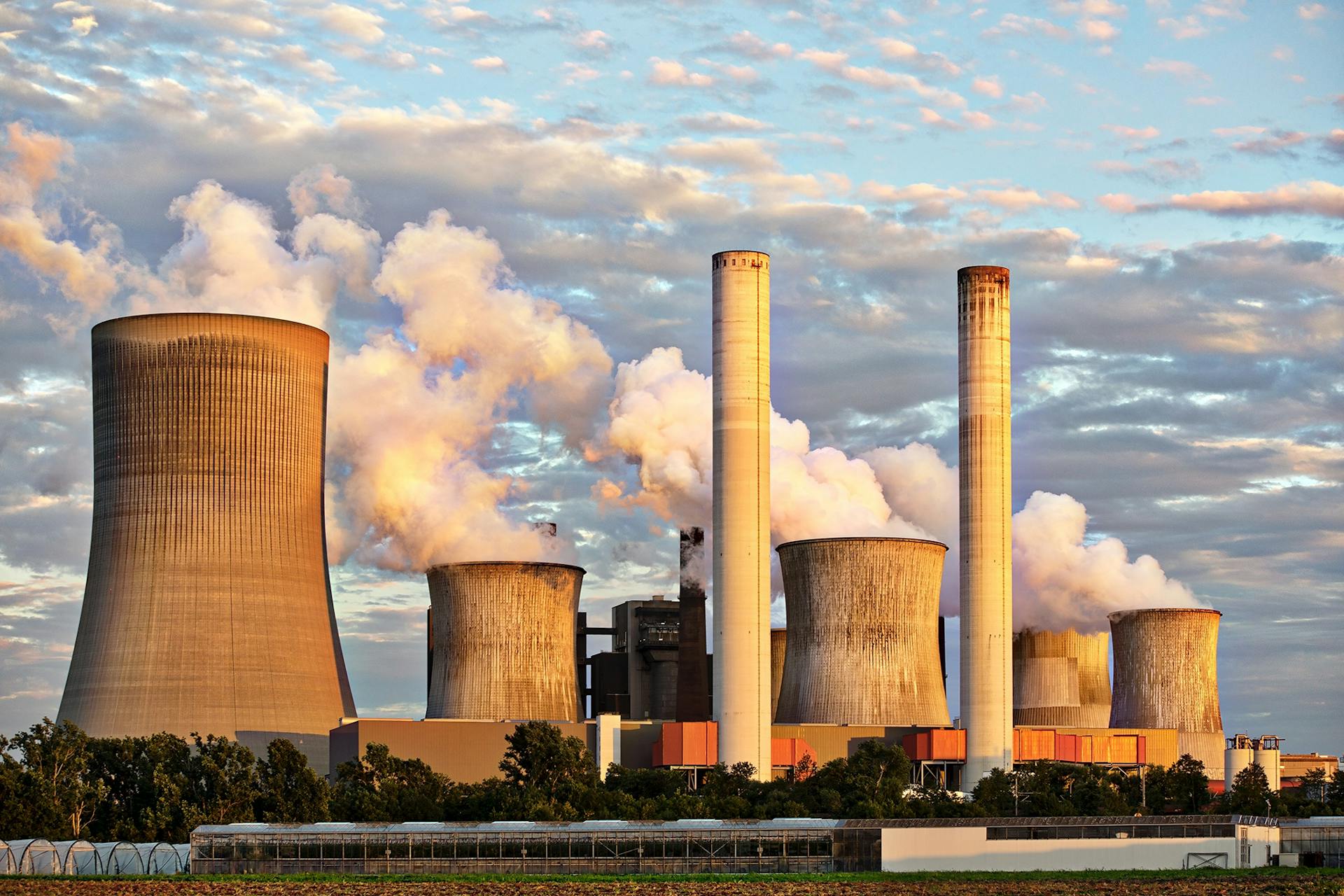
660 MW × 2 Supercritical Thermal Power Plant — Tertiary Treatment + ZLD Polishing
While primarily a TTP+ZLD project, the treatment architecture for this supercritical plant demonstrates SRPEPL's engineering capability in the high-purity water domain for power-sector applications. UPW-specific references are being confirmed and will be published when available.
150,000+ RO Membrane Elements Commissioned
Including replacement orders into Indian refineries and petrochemical plants. The membrane manufacturing track record is the supply-chain proof behind every GREENSTEAM™ installation.
Visit srpmembranes.com →Differentiators
Why SRPEPL is chosen for UPW and boiler feed water projects
Frequently Asked Questions
Ultrapure water systems — common questions
An ultrapure water system produces demineralised water with resistivity ≥16 MΩ·cm, conductivity ≤0.06 µS/cm and silica below 10 ppb, using a treatment train that combines Reverse Osmosis (RO) with Electrodeionisation (EDI). Unlike conventional ion-exchange DM plants that require cyclic chemical regeneration with acid and caustic, RO + EDI operates continuously through in-situ electrochemical resin regeneration. UPW systems are used for boiler feed water in thermal power plants, CPP makeup in refineries, purified water in pharmaceutical manufacturing, process water in semiconductor fabrication and feed water for hydrogen electrolysers.
GREENSTEAM™ is SRPEPL's branded membrane-based boiler feed water system for thermal power plants. It integrates advanced pre-treatment, reverse osmosis and electrodeionisation into a single-vendor EPC scope, replacing cyclic acid-and-caustic DM regeneration with steady-state electromembrane operation. GREENSTEAM™ produces BFW at 16–18 MΩ·cm resistivity and <5 ppb silica, suitable for boiler operating pressures up to and exceeding 240 bar (supercritical). It is applicable to both greenfield installations and brownfield retrofits of existing resin-based DM plants.
RO + EDI systems operate continuously and produce stable, flat-profile water quality without the quality cycling inherent in resin-based DM plants. Conventional DM plants degrade in product quality as resin exhausts, create sodium slip and silica tailing risks near end-of-run, require acid and caustic handling with associated safety exposure, and generate high-TDS regeneration wastewater that is costly to treat under ZLD regimes. RO + EDI eliminates all four of these limitations while typically achieving >99% availability compared to 80–90% for conventional DM.
A properly designed RO + EDI system produces water at ≥16 MΩ·cm resistivity (≤0.06 µS/cm conductivity), with silica below 10 ppb and TOC below 30 ppb. For GREENSTEAM™ boiler feed water configurations, silica is engineered below 5 ppb to meet the chemistry requirements of supercritical boilers operating above 240 bar. These values are achievable when the EDI stage receives RO permeate within specified feed-quality limits.
Yes. SRPEPL delivers brownfield DM-replacement projects where the existing RO system (if present and adequately designed) is retained and the mixed-bed or MB polisher is replaced with EDI stacks. The acid and caustic storage tanks, regeneration pipework and neutralisation pit are decommissioned. Retrofit CAPEX is typically comparable to a major DM refurbishment, with payback driven by chemical elimination, improved availability, reduced manpower and — where applicable — ZLD cost reduction from removing regeneration wastewater.
UPW systems are primarily used in thermal power plants and captive power plants (boiler feed water), refineries and petrochemical complexes (CPP makeup and process utilities), pharmaceutical manufacturing (purified water and WFI feed), semiconductor and electronics manufacturing (process and rinse water), and hydrogen electrolyser and fuel cell facilities (membrane and catalyst protection). In each case, the common requirement is continuously stable ionic purity where even short-duration quality excursions can damage critical assets or compromise product quality.
SRPEPL manufactures RO membrane elements (SRP BW-series brackish-water RO and SRP HP-series high-pressure RO) at two Indian facilities — Panchkula, Haryana and HPSIDC Baddi, Himachal Pradesh — through its membrane manufacturing brand, SRP Membranes (srpmembranes.com). These elements are used in SRPEPL's own EPC projects, including UPW and GREENSTEAM™ systems. The company has commissioned over 150,000 membrane elements to date, including replacement orders into Indian refineries and petrochemical plants.
CAPEX depends on system capacity, raw water quality, target product water specification, pre-treatment complexity, materials of construction and civil scope. SRPEPL's design team prepares site-specific CAPEX estimates as part of the RFQ response process, based on the client's feed water analysis and product water specification. Share your feed water data and required flow rate with our engineering team to receive a preliminary scope and estimate.
Request a UPW system design consultation
To receive a treatment architecture and preliminary BOQ for an ultrapure water or GREENSTEAM™ boiler feed water system, share your feed water analysis, target product water quality, required flow rate (m³/hr) and application context with our engineering team.