

What is industrial water reuse?
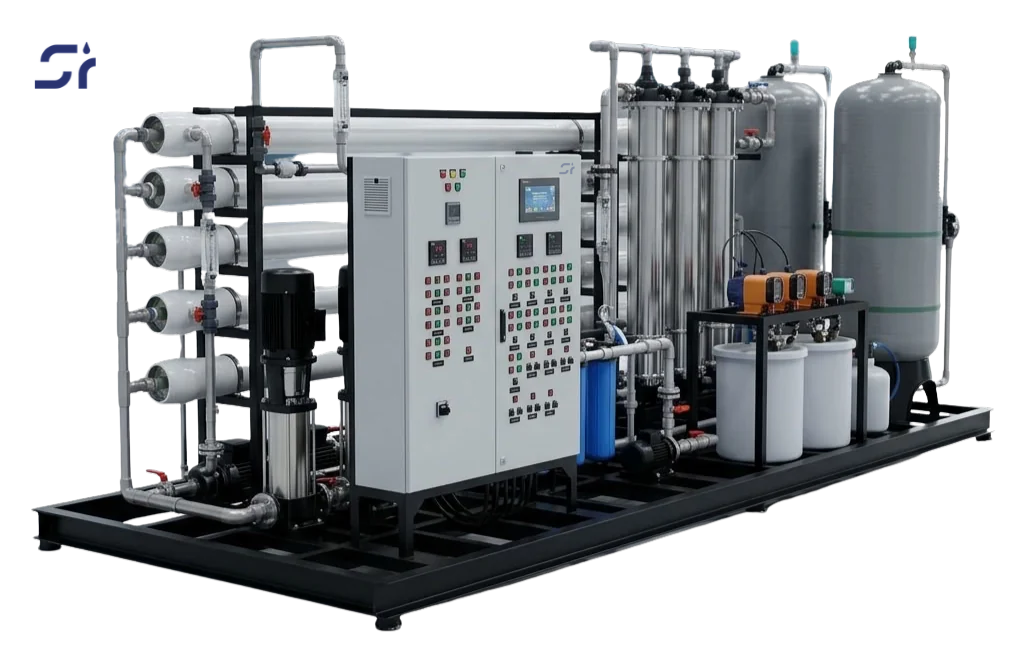
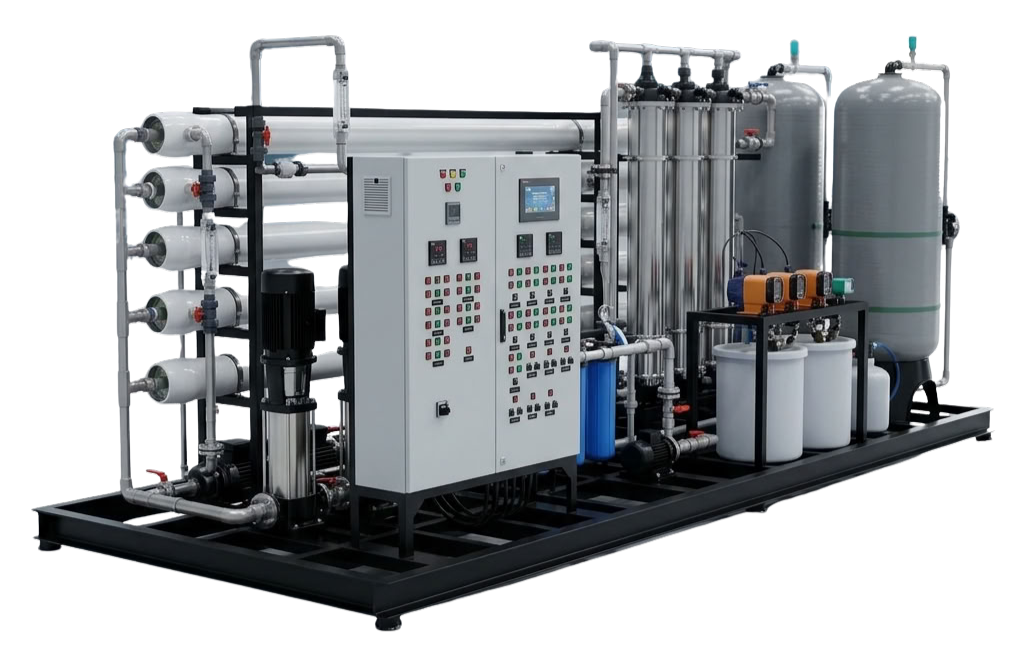
Industrial water reuse means treating a plant's own effluent to a quality that lets it return to the process, cooling or utilities instead of being discharged. A complete reuse solution covers everything between the effluent drain and the reused water: characterisation, treatment train, concentrate management, controls and long-term operation.
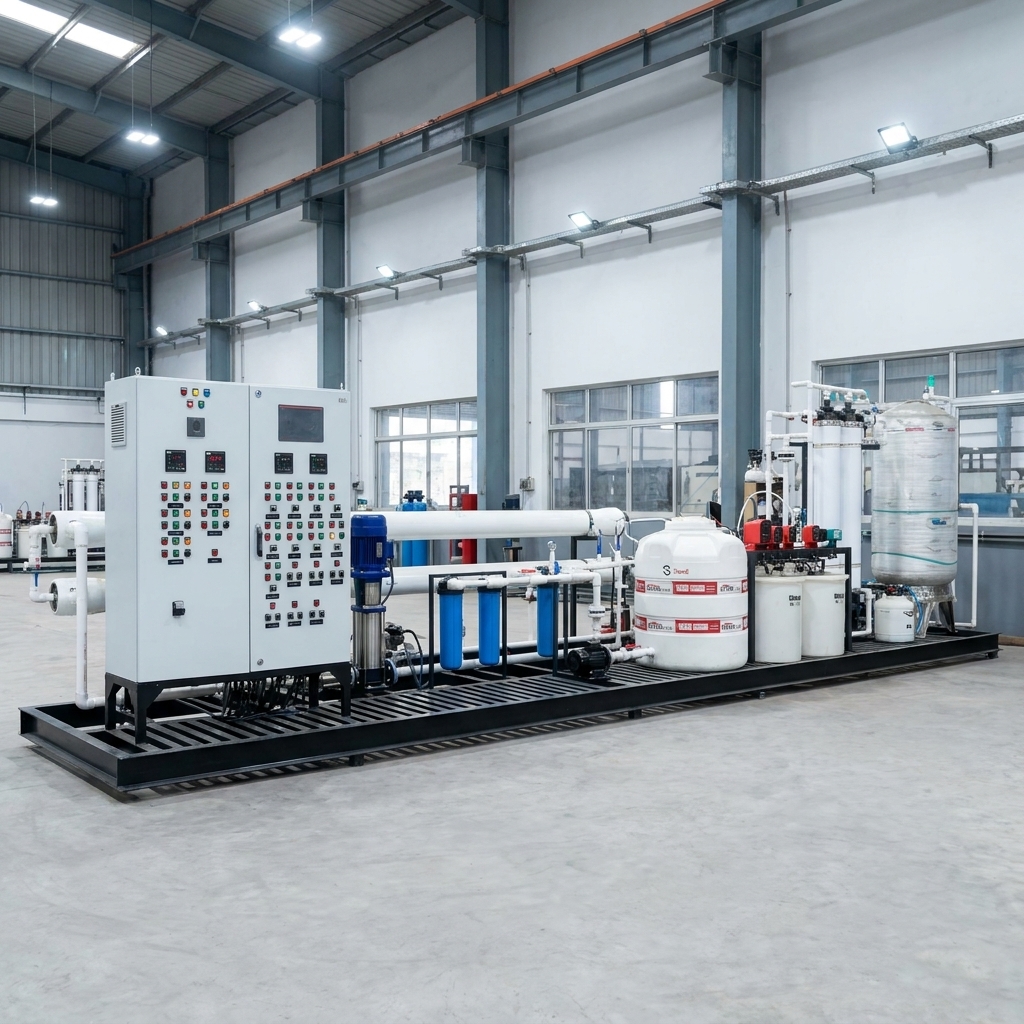
SR Paryavaran Engineers has delivered 6,000+ water and wastewater systems since 1990, builds ETPs and CETPs, tertiary UF and RO plants and ZLD trains, and manufactures its own MBR, UF, RO and ultra-high-pressure membranes. Delivery is on EPC, DBO or O&M terms, backed by five regional after-sales offices.
What does a complete water reuse solution include?
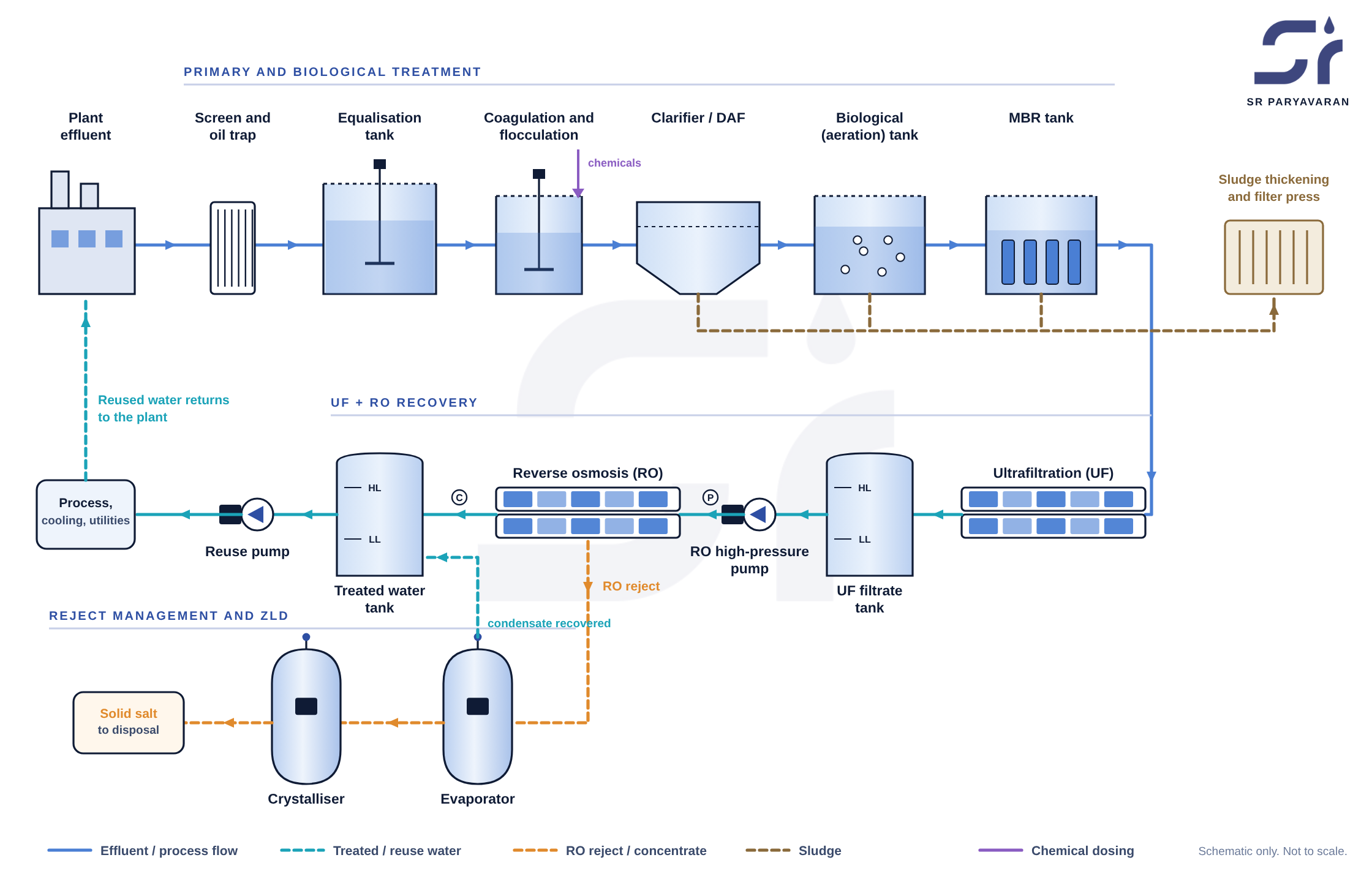
One treatment logic in four stages, delivered through six scope elements. If a proposal leaves one out, find out who is responsible for it.
the effluent
biological treatment
recovery
& reuse
How do you evaluate industrial water reuse providers?
Use these questions with any provider, including us. The right-hand column shows our answer so you can compare like for like.
| Criterion | Question to ask | Why it matters | SRPEPL |
|---|---|---|---|
| Design basis | Is the design based on my measured effluent or a standard template? | Effluent from different industries shares almost no design parameters. | Sized against measured influent for every plant. |
| Membrane ownership | Who specifies, manufactures and supplies the UF and RO elements? | The membrane train is where reuse and ZLD plants most often under-perform. | MBR, UF, RO and UHP membranes manufactured in-house. |
| Reject handling | What happens to the RO concentrate, and is it in the price? | Reject management can decide whether reuse is viable at all. | Designed as part of scope, with ZLD extension where required. |
| Water balance | Can you show the water balance behind your recovery claim? | Recovery figures are meaningless without the feed and scaling assumptions. | Water and mass balance issued as part of design. |
| Performance guarantee | What outlet quality and recovery do you guarantee, and how is it tested? | Ties the provider to the result, not only to supply. | Performance test against contracted outlet parameters; defect liability period typically 12–24 months. |
| Operation | Can you operate the plant after commissioning? | Membranes need disciplined cleaning and monitoring to hold performance. | O&M and DBO terms; five regional after-sales offices. |
| References | Which plants have you built in my industry and region? | Industry experience shortens commissioning and reduces surprises. | Sugar, distillery, textile, beverage, paper and chemical references on the ETP page. |
| Compliance | What standards and certifications do you design and work to? | Consent to Operate depends on documented compliance. | CPCB norms; ISO 9001:2015, 14001:2015, 45001:2018. |
Four ways to buy. One treatment logic.
EPC, DBO, O&M or a retrofit — the same engineering sits behind each. What changes is how much of the design, build and operating risk stays with you.
How SRPEPL delivers a water reuse project
Six steps from your effluent data to a plant that holds its performance.
Delivery backed by manufacturing
Water reuse by industry
The effluent and the reuse target differ by sector. These pages show the industry-specific design issues.
Frequently Asked Questions
Industrial water reuse — common questions
A complete solution includes a water audit and effluent characterisation, a water balance, an effluent treatment train (primary and biological), tertiary treatment with ultrafiltration and reverse osmosis, a plan for the concentrated reject (such as evaporation and crystallisation), sludge handling, controls and monitoring, commissioning with a performance test, and operation and maintenance support.
Compare providers on whether they design to your measured effluent rather than a template, who controls the membrane stages, how they handle the RO reject, what performance guarantee they accept, and whether they can operate the plant after commissioning. Ask for references in your own industry and for the water balance behind any recovery claim.
Water reuse recovers treated water for process or utility use, but a concentrated reject stream usually remains. Zero liquid discharge goes further: the reject is evaporated and crystallised so that no liquid effluent leaves the site, producing recovered water and solid salt. See Zero Liquid Discharge.
The common models are turnkey EPC, where the provider designs, builds and commissions the plant; design-build-operate (DBO), where the provider also runs it for a set term; and a stand-alone operation and maintenance contract for an existing plant. The right model depends on how much operating risk the owner wants to keep.
Often yes. An existing effluent treatment plant can be upgraded with a tertiary stage of ultrafiltration and reverse osmosis, and with a ZLD extension if needed. The existing biological stage first needs to be checked against the measured effluent, because RO performance depends on a stable, clean feed.
Yes. SR Paryavaran Engineers delivers ETPs, tertiary treatment, reverse osmosis and zero liquid discharge systems on EPC, DBO and O&M terms, with in-house manufactured MBR, UF and RO membranes and five regional after-sales offices in India.
Send your effluent data for a reuse assessment
Share the site, flow, effluent analysis and what you want to reuse the water for. Our engineers will map a treatment train and the reject plan against your actual feed.
Related Solutions