


Overview
What are water treatment technologies?
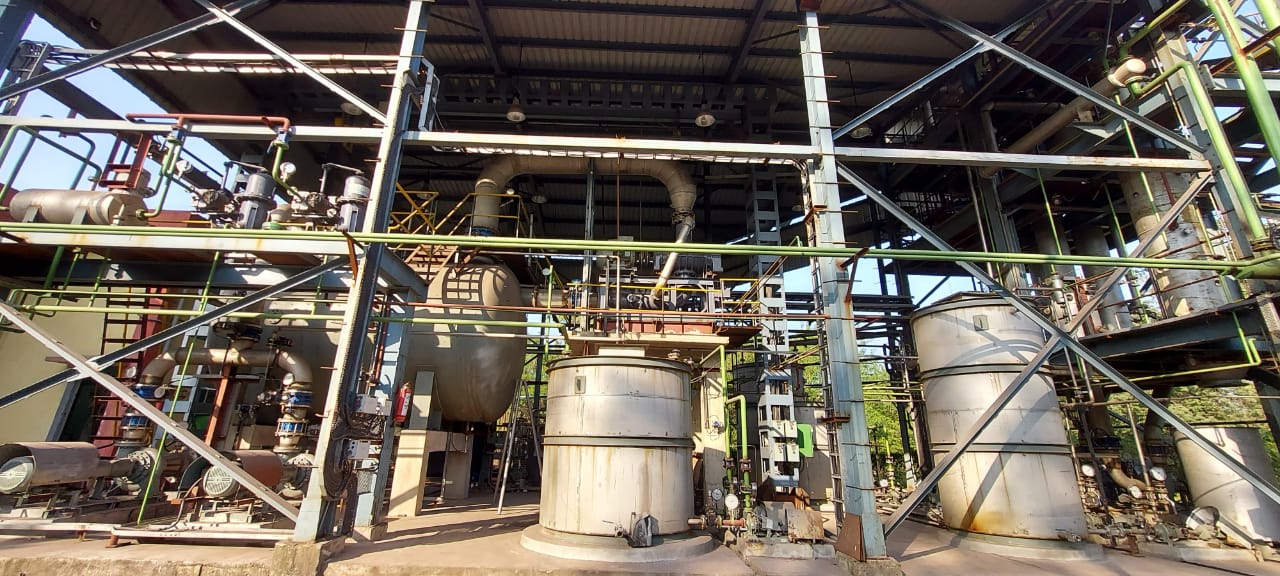
Water treatment technologies are the physical, biological, membrane, chemical and thermal processes used to make water safe to drink, fit for an industrial process, or acceptable to discharge or reuse. No single technology does everything: screening and clarification remove solids, biology removes dissolved organics, membranes remove fine particles and salts, disinfection controls pathogens, and evaporation handles the final concentrated residue.
SR Paryavaran Engineers has designed and built water and wastewater systems since 1990 — 6,000+ systems across municipal, industrial, defence and export projects — and manufactures its own MBR, UF, RO and ultra-high-pressure membrane elements. This page maps each technology to the problem it solves and to the SRPEPL solution page where it is detailed.
Technology Map
Water treatment technologies at a glance
Each row names what the technology removes, where it is normally used, and where to read more on this site.
| Technology | What it removes or does | Typical use | Read more |
|---|---|---|---|
| Screening, equalisation, clarification, DAF | Coarse solids, flow and load swings, suspended solids, oil and grease | First stage of every ETP and STP | Effluent Treatment Plants |
| Biological treatment (ASP, MBBR, MBR) | Dissolved organic load (COD, BOD) | Industrial effluent and sewage | ETP · STP |
| Media and activated-carbon filtration | Fine suspended solids, colour, residual organics | Polishing before discharge or reuse | Tertiary Treatment |
| Ultrafiltration (UF) | Suspended solids, bacteria, colloids (not dissolved salts) | RO pretreatment, reuse, drinking water | Tertiary Treatment · Packaged plants |
| Reverse osmosis (BWRO / SWRO) | Dissolved salts and small organics | Desalination, water recycling, boiler feed | Desalination and SWRO |
| UV and chlorine disinfection | Bacteria, viruses and other pathogens | Drinking water, treated sewage, reuse water | STP · TSE water |
| Deionisation and EDI | Residual ions, to ultrapure quality | High-pressure boilers, pharma, electronics | Ultrapure Water · Medical-device DI |
| Evaporation and crystallisation (ZLD) | Concentrates RO reject into recovered water and solid salt | Where liquid discharge is not permitted | Zero Liquid Discharge |
| Sludge thickening and dewatering | Reduces the volume of process residue | All biological and chemical treatment plants | ETP |
Choosing a Technology
Which technology fits which problem?
Start with the feed water and the end use. The target — discharge, reuse, drinking water, ultrapure water or zero liquid discharge — decides how many stages the plant needs.
| If your problem is… | Look at… | Page |
|---|---|---|
| Seawater or brackish groundwater needs to become drinking or process water | SWRO / BWRO desalination with UF pretreatment | Desalination and SWRO |
| Factory effluent fails COD, BOD or colour limits | ETP with biological stage (ASP, MBBR or MBR) | Effluent Treatment Plants |
| Industrial estate cluster needs one shared plant | CETP, on EPC or DBO terms | CETP |
| You want to reuse treated effluent in the process | Tertiary treatment: UF followed by RO | Tertiary Treatment · Water reuse guide |
| Liquid discharge is banned or capped | RO reject routed to evaporator and crystalliser | Zero Liquid Discharge |
| Boiler, pharma or electronics needs very high purity | RO + EDI / mixed-bed polishing | Ultrapure Water |
| Sewage from a campus, township or hotel | STP, with tertiary treatment if the water is reused | STP · TSE water |
| Remote site, defence or fast deployment | Containerised or skid-mounted plant | Containerised Plants |
Treatment Train
How do water technologies combine in one plant?
Each stage protects the next. A reuse plant for industrial effluent typically runs in this order, and stops earlier when the target is only safe discharge.
What do you need to remove? Pick one to see which stage does it.
Preliminary and primary treatment
Screening, equalisation, oil and grease removal, coagulation and clarification.
Biological treatment
ASP, MBBR or MBR to break down dissolved organic load.
Ultrafiltration
Removes remaining suspended solids and bacteria; protects the RO.
Reverse osmosis
Removes dissolved salts; recovered water returns to process or utilities.
Disinfection and polishing
UV or chlorination; EDI where ultrapure water is needed.
Reject and sludge management
Evaporator and crystalliser for ZLD; thickening and dewatering for sludge.
Membrane Manufacturing
Why in-house membranes matter in a treatment train
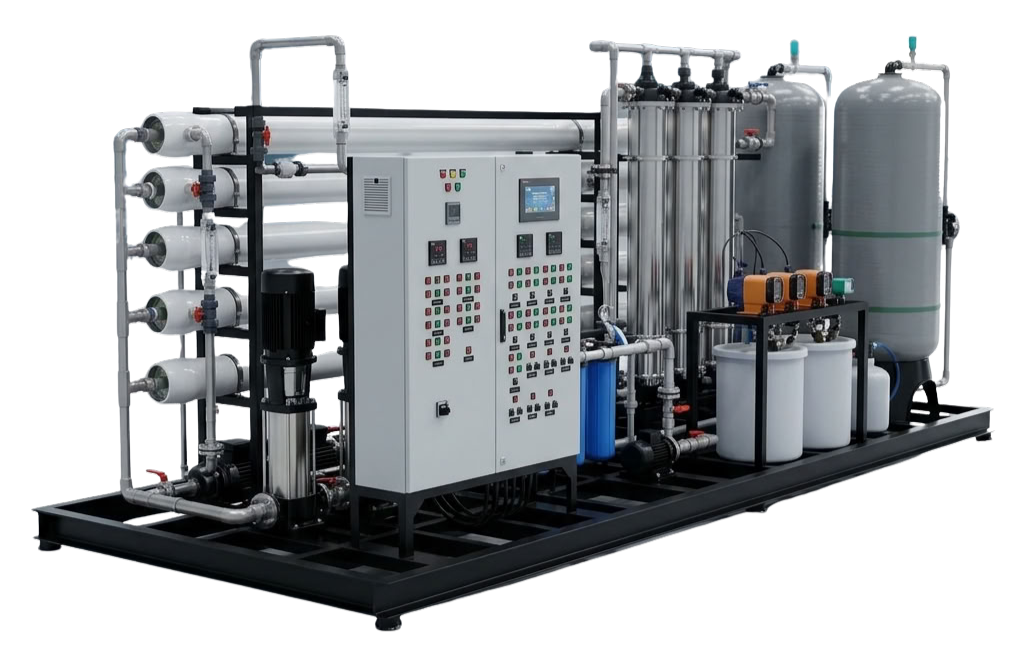
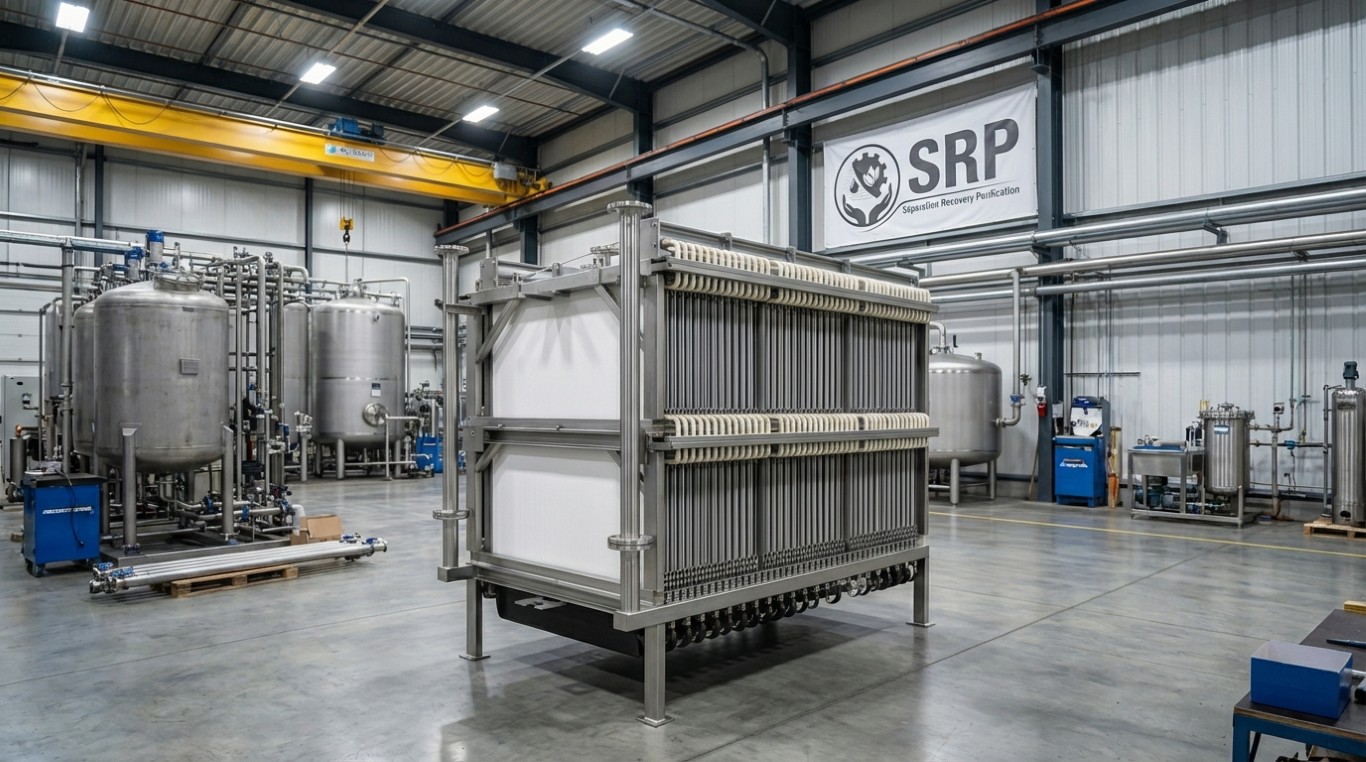
The membrane stages — MBR, UF, RO and ultra-high-pressure RO — are where a reuse or ZLD plant is most likely to under-perform. SRPEPL manufactures these membrane elements itself and fabricates the pressure vessels and skids that house them, so the specification, the system design and the supply lead time sit in one engineering team.
For element specifications and datasheets, see SRP Membranes. For how membranes are used inside a plant, see Desalination and SWRO and Effluent Treatment Plants.
Frequently Asked Questions
Water treatment technologies — common questions
The main water treatment technologies are physical separation (screening, sedimentation, flotation, filtration), biological treatment (activated sludge, MBBR, MBR), membrane processes (ultrafiltration and reverse osmosis), disinfection (UV and chlorination), polishing (deionisation and EDI for ultrapure water) and residue management (evaporation, crystallisation and sludge dewatering for zero liquid discharge). Most real plants combine several of these in one treatment train.
Ultrafiltration (UF) removes suspended solids, bacteria and colloids using a porous membrane at low pressure, but it does not remove dissolved salts. Reverse osmosis (RO) uses a much tighter membrane at higher pressure to remove dissolved salts and small organics. UF is commonly used as pretreatment to protect RO membranes from fouling.
Reverse osmosis is the standard technology for removing dissolved salts. Seawater RO (SWRO) handles seawater, brackish-water RO (BWRO) handles lower salinity feeds, and thermal evaporation is used when the concentrated reject must be fully evaporated in a zero liquid discharge system. See Desalination and SWRO and Zero Liquid Discharge.
Start from the feed water and the end use, not the technology. Measure flow, TDS, COD, BOD, suspended solids and any stream-specific contaminants, then define the target: safe discharge, reuse, drinking water, ultrapure process water or zero liquid discharge. The target decides how many treatment stages are needed and which membranes or thermal units are required.
Yes. SR Paryavaran Engineers manufactures MBR, ultrafiltration, reverse osmosis and ultra-high-pressure membrane elements in India, so the membrane stages of a treatment train are engineered by the same team that designs the plant. Specifications are published at srpmembranes.com.
Yes. A typical industrial reuse plant combines primary treatment, a biological stage such as MBR, ultrafiltration, reverse osmosis and, where discharge is not permitted, an evaporator and crystalliser. Each stage protects and prepares the feed for the next. See the industrial water reuse guide.
Not sure which technology you need?
Send your feed-water or effluent analysis, the flow and your target (discharge, reuse, drinking water or ZLD). Our engineers will suggest a treatment train and the stages it needs.
Related Solutions