



Two problems. One site. Engineered differently.
A pharma site usually needs both. Both rest on membranes SRPEPL manufactures in India — MBR, UF, RO and Ultra-High-Pressure (UHP) elements — and the process equipment fabricated to house them.
- Very high COD streams from synthesis and neutralisation
- High TDS, residual solvents, fluctuating pH
- Trace API compounds — CPCB discharge concern
- ZLD required for most bulk-drug units
- Treatment: MBR → RO → UHP RO → MEE/MVR → crystalliser
- Water is a manufacturing raw material — pharmacopoeia grade required
- Purified Water (PW) and Water-for-Injection (WFI) grades
- References: IP / USP / EP pharmacopoeia monographs
- Audit regimes: CDSCO, USFDA, EU-GMP for export sites
- Treatment: multi-stage RO + EDI + UF, matched to grade
Why pharma effluent is one of the hardest water problems in industry
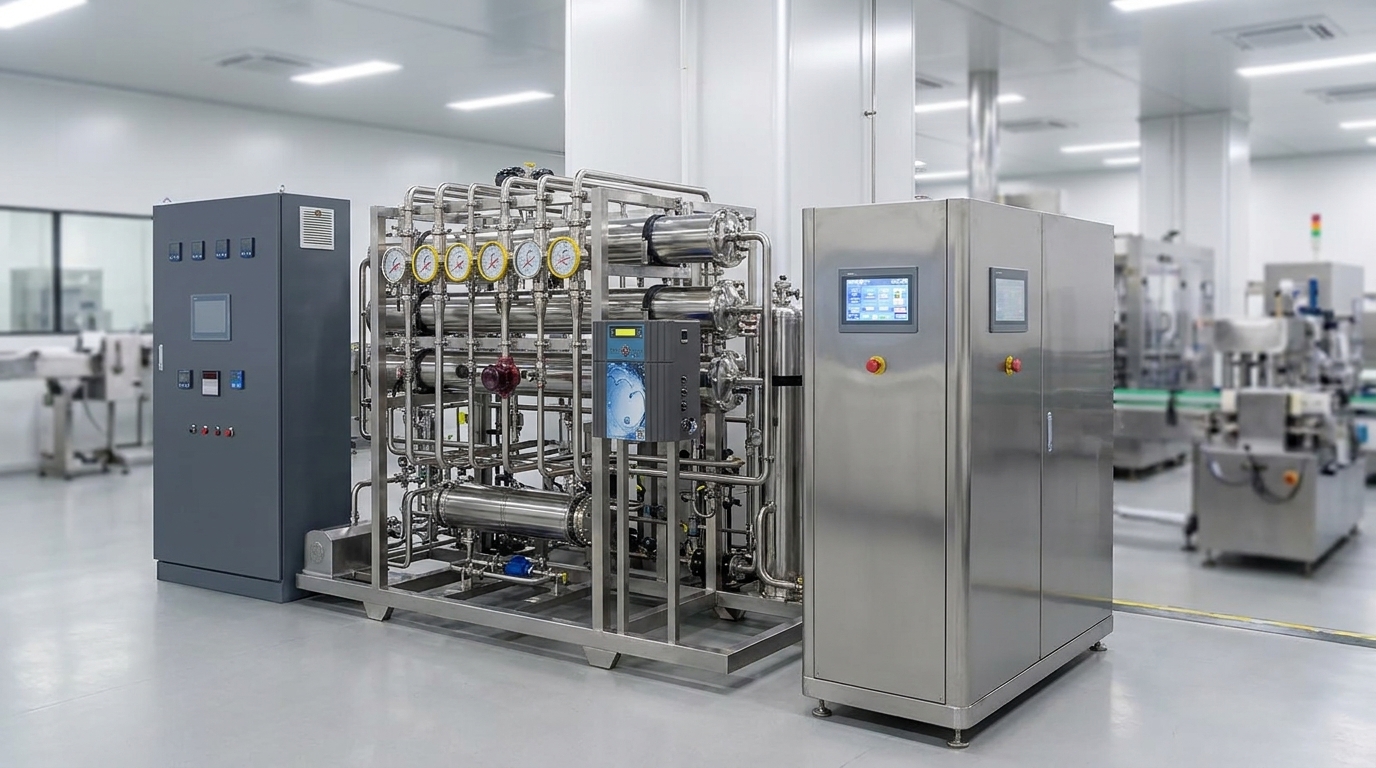
Bulk-drug and API effluent is among the most difficult industrial wastewater to treat because a single plant generates many low-volume, high-strength streams that vary by campaign rather than running steadily. No single technology treats the whole stream — the treatment train is a sequence of matched stages, not one box.
Four-layer treatment train — segregation to ZLD
A bulk-drug effluent train is built in four functional layers. The critical design judgement is how far to push membranes before handing reject to evaporation. Every additional percent of RO/UHP recovery reduces the volume sent to the MEE and the operating cost of the plant. SRPEPL sizes that handoff against the feed, not a standard recipe.
Does pharma need Zero Liquid Discharge in India?
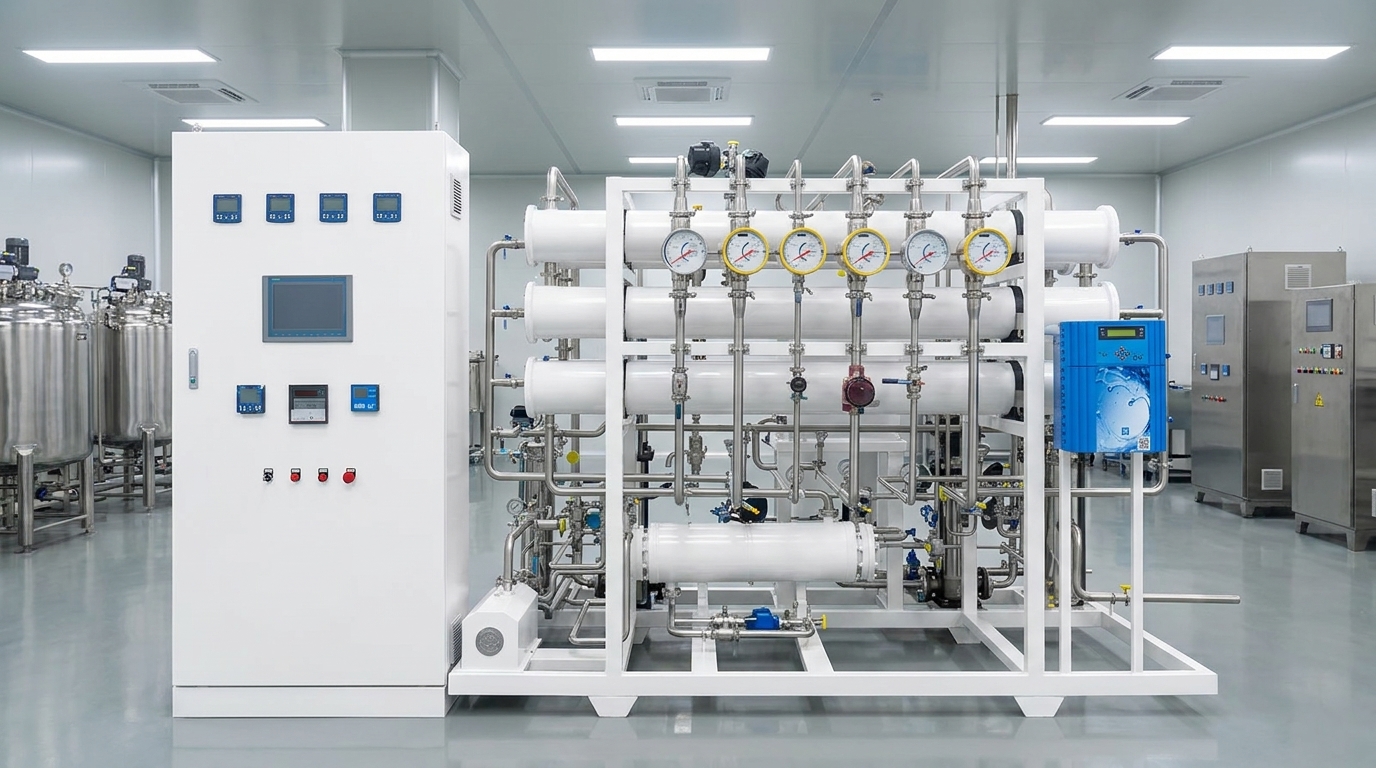
Many pharma and bulk-drug plants in India are required to operate Zero Liquid Discharge — particularly units in water-stressed zones, those discharging into already-stressed catchments, and clusters where State Pollution Control Board consent conditions mandate it. ZLD recovers 95–99% of water from the effluent and converts the residual brine to solid salt.
Purified Water & WFI generation for formulation plants
Formulation and finished-dosage plants need water as a raw material that meets pharmacopoeia grade. The treatment train is the inverse of the effluent side: progressively higher purity rather than progressively higher recovery. SRPEPL engineers high-purity water systems built on multi-stage RO, electrodeionisation (EDI) and ultrafiltration, matched to the pharmacopoeia grade and audit regime the plant operates under.
Why a membrane manufacturer is the right partner for pharma water
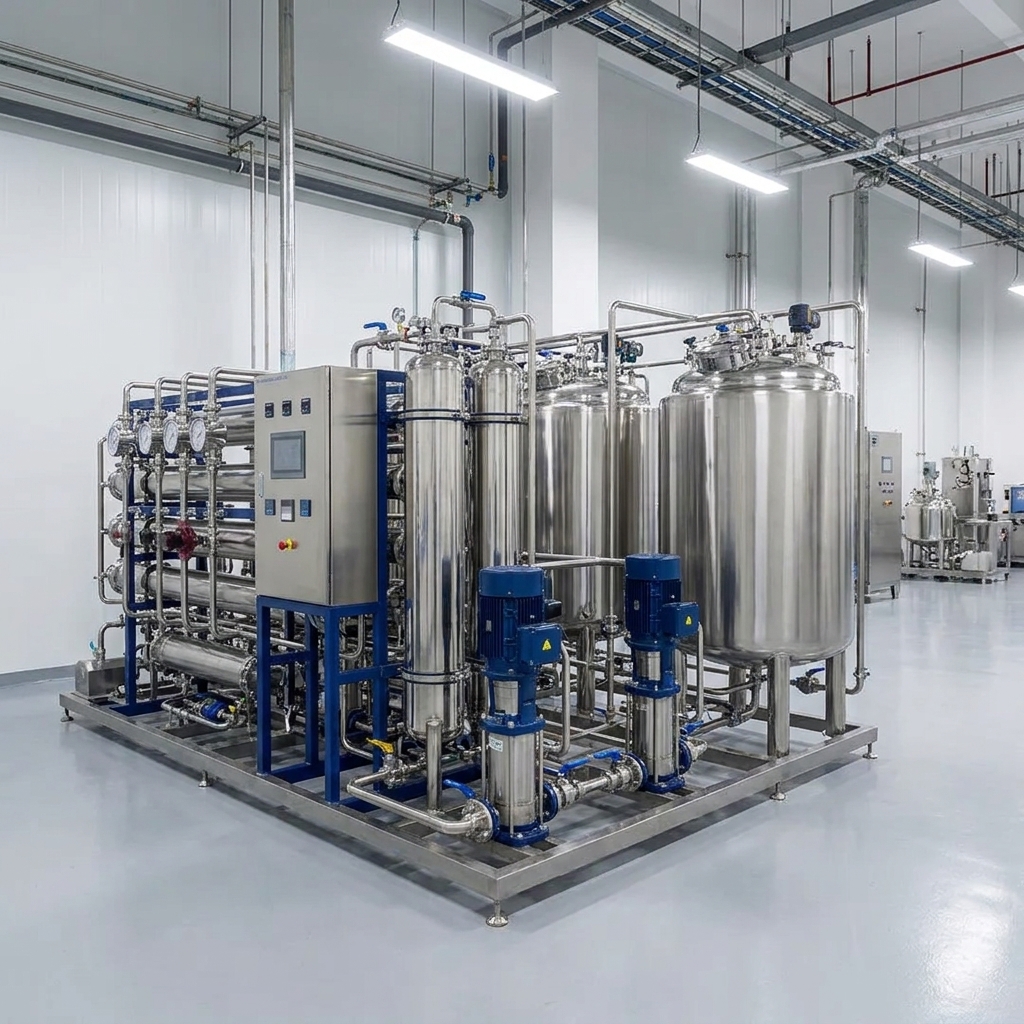
The decisive technical risk in pharma water sits in the membrane: RO and UHP elements running against high-TDS, high-COD, chemically aggressive feed are exactly where fouling, scaling and premature replacement destroy plant economics. SRPEPL manufactures its own MBR, RO, UF and UHP membrane elements in India and fabricates the pressure vessels, skids and high-pressure piping that house them — so membrane specification and the equipment around it are decided by one engineering team rather than split across a contractor and a membrane vendor.
How a pharma plant can engage SRPEPL
Frequently asked questions
Pharmaceutical and bulk-drug effluent is treated by segregating streams at source, then routing them through matched stages: pre-treatment and solvent stripping for concentrated streams, Membrane Bioreactor (MBR) biological treatment for dilute streams, reverse osmosis and Ultra-High-Pressure RO for water recovery, and a Multiple-Effect Evaporator with crystalliser for brine concentration to Zero Liquid Discharge. No single technology treats the whole effluent because a plant produces many streams of very different strength.
Bulk-drug effluent carries very high COD and TDS, residual solvents and trace active ingredients, and many plants discharge into water-stressed catchments where State Pollution Control Board consent conditions require zero liquid discharge. ZLD recovers 95–99% of the water and converts the residual brine to solid salt, leaving no liquid effluent to the environment. Where ZLD is not yet mandated, near-ZLD with a managed reject is often the optimum and is designed to upgrade to full ZLD later.
They are opposite problems in the same plant. Effluent treatment recovers reusable water from contaminated waste and concentrates the residue to solid salt. Process-water generation takes incoming water and refines it to pharmacopoeia grade — Purified Water and Water-for-Injection — for use as a manufacturing input. Effluent systems optimise for recovery; high-purity systems optimise for purity and validated distribution.
SRPEPL engineers high-purity water systems for pharmaceutical manufacturing using multi-stage RO, electrodeionisation (EDI) and ultrafiltration, matched to the Purified Water or Water-for-Injection grade and the pharmacopoeia and audit regime the plant operates under.
They are complementary, not alternatives. RO and Ultra-High-Pressure RO recover reusable water at far lower energy than evaporation, so the design objective is to push membrane recovery as far as the feed chemistry allows and hand only the final, smallest reject to a Multiple-Effect Evaporator for concentration to solid salt. Maximising RO/UHP recovery before evaporation is the single largest lever on a pharma ZLD plant's operating cost.
Effluent discharge is governed by CPCB norms and State Pollution Control Board consent conditions, with ZLD directions applying to many units. Process water is governed by the relevant pharmacopoeia monographs (IP / USP / EP) for Purified Water and Water-for-Injection, alongside the plant's regulatory regime — CDSCO for domestic units, and USFDA or EU-GMP for export-oriented sites.
SRPEPL serves pharma and bulk-drug clients nationally from its Panchkula, Haryana headquarters and two manufacturing and fabrication facilities, with five regional after-sales offices across India and an international office in the Jebel Ali Free Zone, Dubai for GCC export. Major Indian pharma clusters include Hyderabad/Telangana, Visakhapatnam–Andhra Pradesh, Gujarat (Ankleshwar, Vapi), Baddi–Himachal Pradesh, Sikkim and Maharashtra.
Related solutions & pages
Discuss your pharma water or effluent stream
Send us your effluent stream profile (segregated stream volumes, COD, TDS, pH, solvent load) or your process-water grade and capacity, and our engineers will map a treatment train against it.