



Overview
STP design, EPC and operations — across the full capacity spectrum
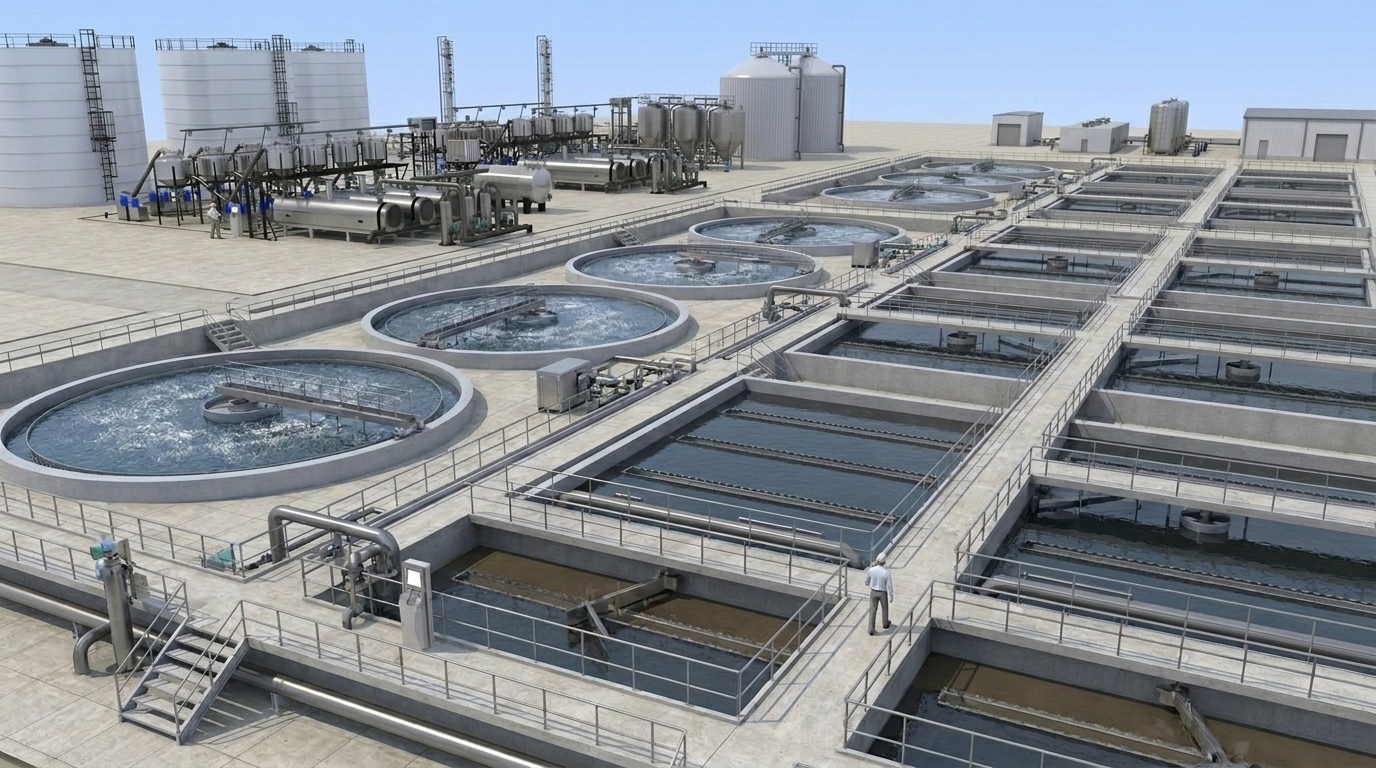
SR Paryavaran Engineers designs, builds, commissions and operates sewage treatment plants from 10 KLD packaged units for institutional campuses through to 50+ MLD municipal plants under central and state government missions. Technology selection — MBR, SBR, MBBR or extended aeration — is driven by treated-water reuse requirements, land availability, odour sensitivity and lifecycle cost.
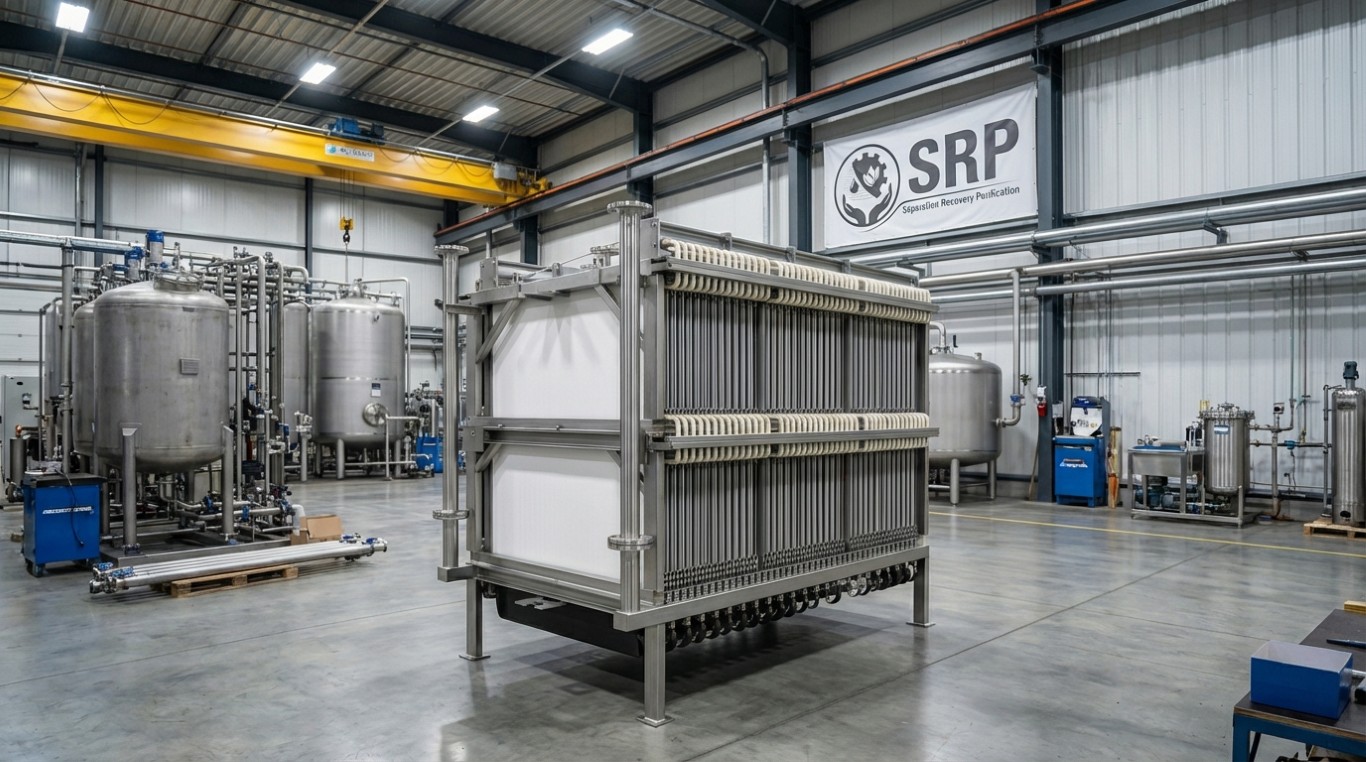
SRPEPL has delivered 450+ packaged Membrane Bioreactor (MBR) systems and manufactures its own AEROFLO MBR flat-sheet membranes in India through SRP Membranes. The anchor municipal reference is the AMRUT Panchkula and Gurugram programme — 15 STPs and 100 km of sewerage pipeline, ₹75 Cr — delivered for Haryana Urban Local Bodies.
Technology Selection
STP technologies — MBR, SBR, MBBR, extended aeration
The right STP technology is determined by four site-specific factors: treated-water reuse standard, available land area, odour sensitivity of surrounding land use, and lifecycle cost. SRPEPL designs and builds across all four mainstream configurations.
Membrane Bioreactor (MBR) combines biological treatment with membrane filtration in a single tank. MBR consistently produces effluent meeting BOD ≤ 5 mg/L, TSS ≤ 5 mg/L and turbidity < 1 NTU — well ahead of CPCB 2017 norms. The compact footprint makes MBR the technology of choice when land is constrained and treated water is directed to reuse.
Best suited for
Sequential Batch Reactor (SBR) carries out biological treatment, settling and decanting in a single tank in sequential cycles — eliminating the need for a separate secondary clarifier. SBR handles variable influent flows better than continuous-flow systems, making it well-suited for municipal applications where flow varies significantly between day and night.
Best suited for
Moving Bed Biofilm Reactor (MBBR) grows biomass on plastic carrier media suspended in the aeration tank, achieving high biological treatment efficiency in a compact volume. MBBR is particularly effective for retrofitting existing activated sludge plants — the carriers can be added to existing tanks to increase capacity without new civil construction.
Best suited for
Extended aeration (conventional activated sludge process with long HRT) is the most widely deployed STP configuration in India — low sludge production, proven operation, and low operating complexity. It is the default specification for many institutional and municipal STPs where treated water does not need to meet reuse-grade quality.
Best suited for
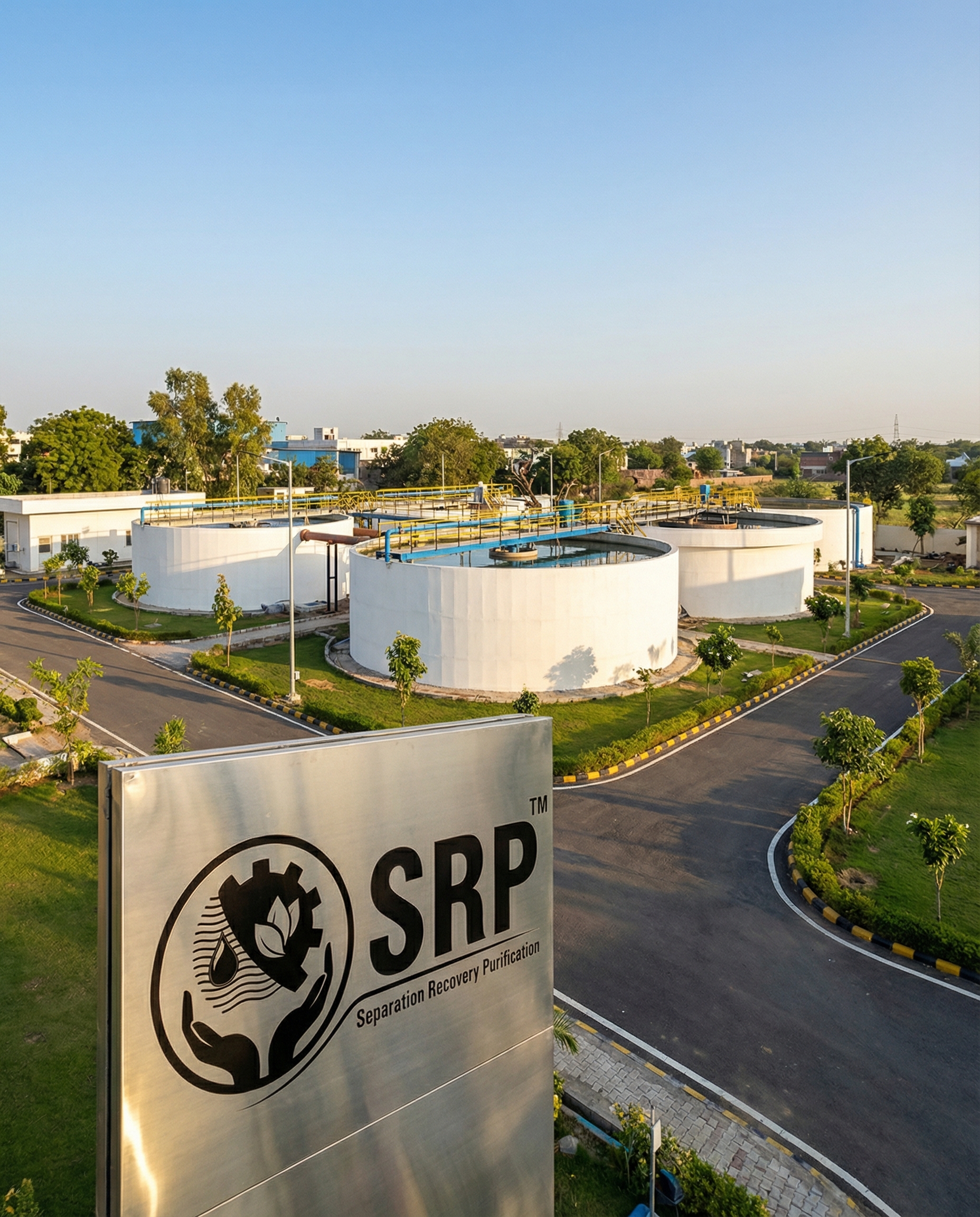
Project Experience
SRPEPL's sewage treatment plant track record
SR Paryavaran Engineers has delivered sewage treatment systems across the capacity spectrum — from 10 KLD packaged MBR units to multi-MLD municipal EPC contracts.
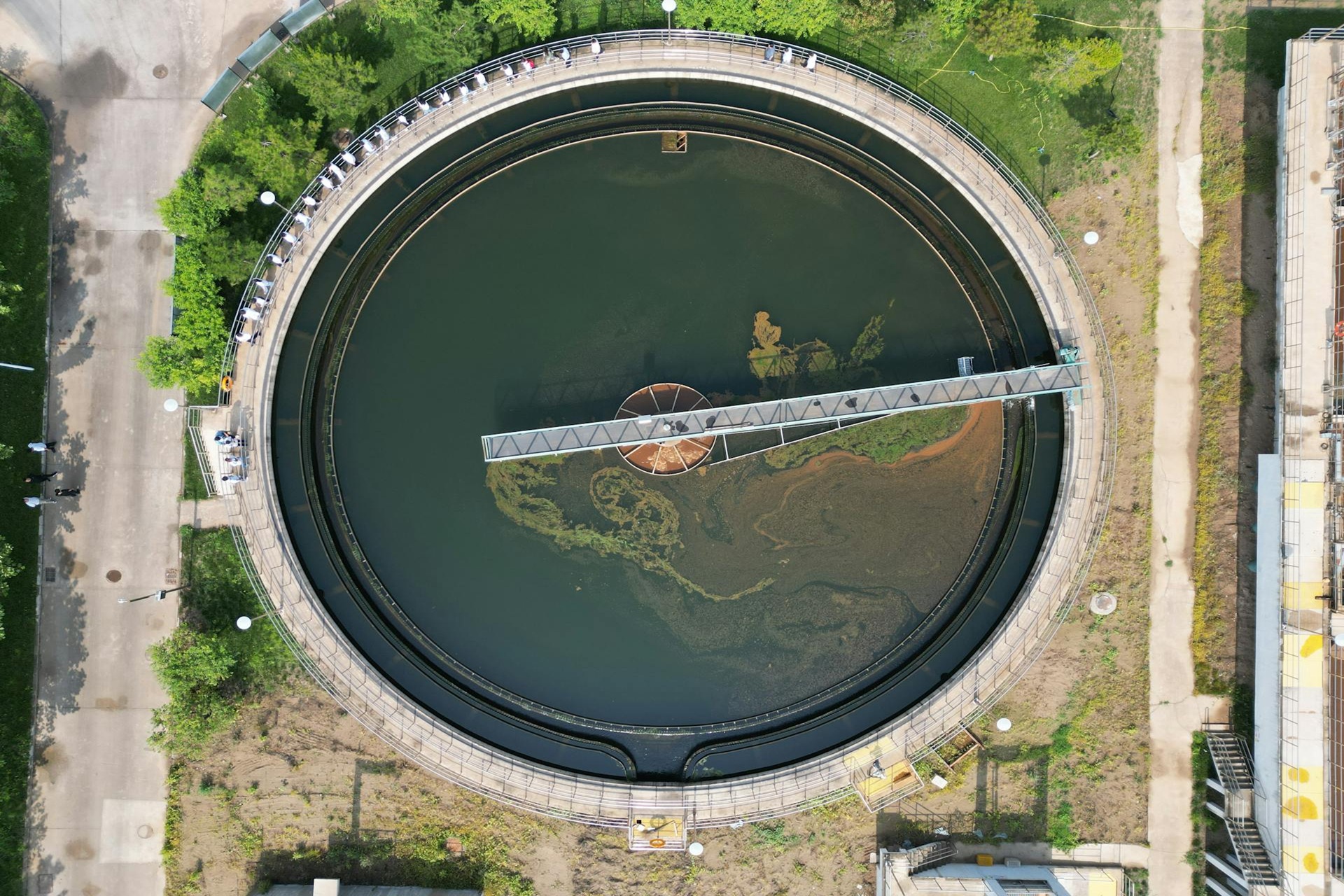
AMRUT Panchkula & Gurugram — 15 STPs + 100 km Sewerage Network
SRPEPL's anchor municipal STP reference — a single EPC package covering both treatment infrastructure and the sewerage collection network under India's AMRUT mission. Distributed across two major Haryana cities in a single contract.
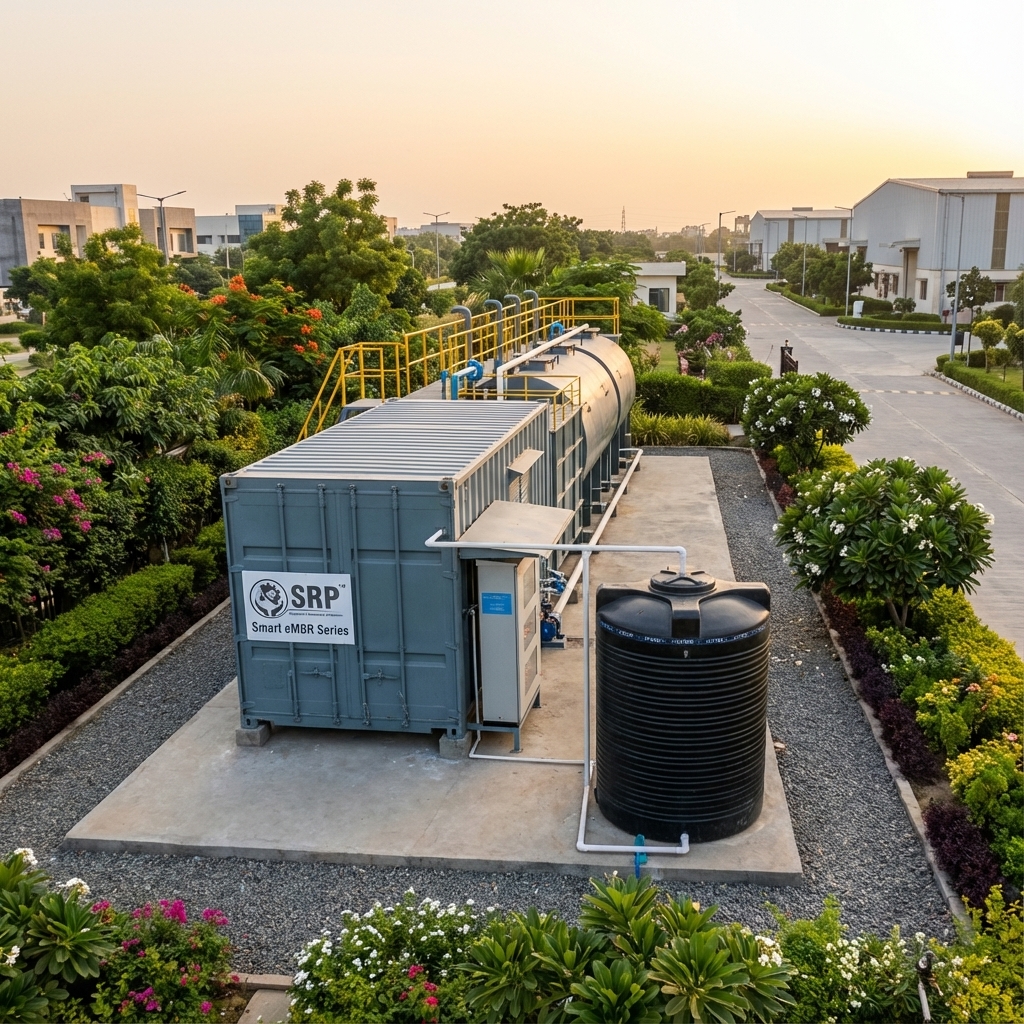
Packaged MBR Systems — 450+ Units Delivered
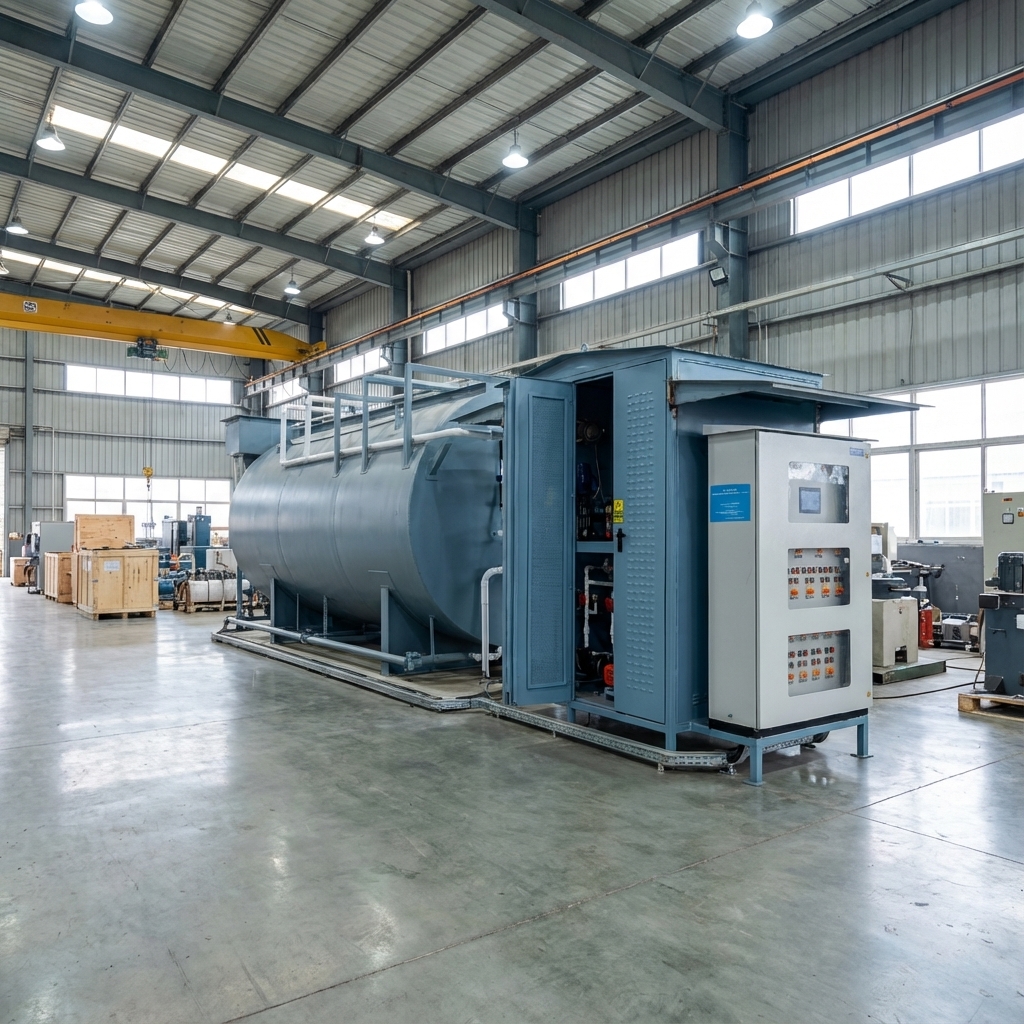
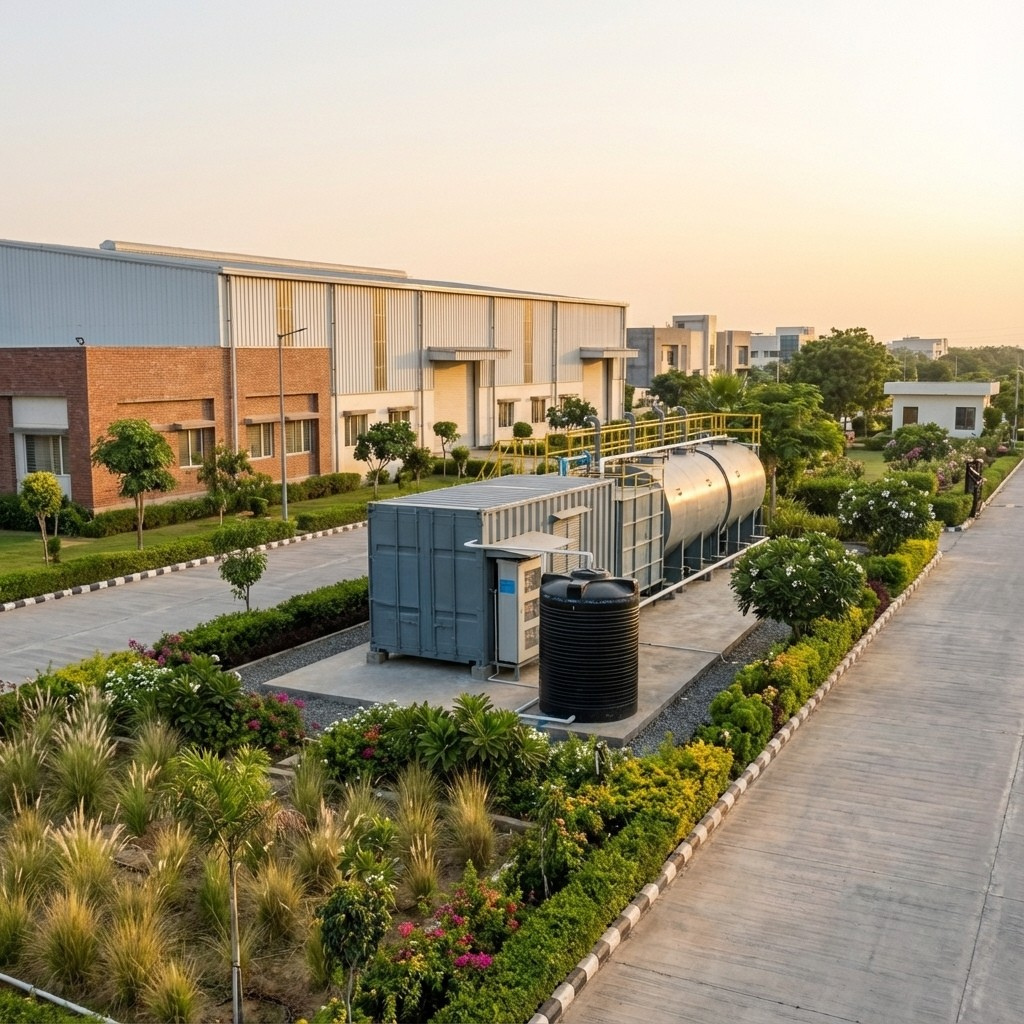
Pre-engineered, skid-mounted or containerised MBR-based STPs — deployed for institutional campuses, defence formations, construction sites, highway rest areas and any application where land is constrained and fast deployment is needed.
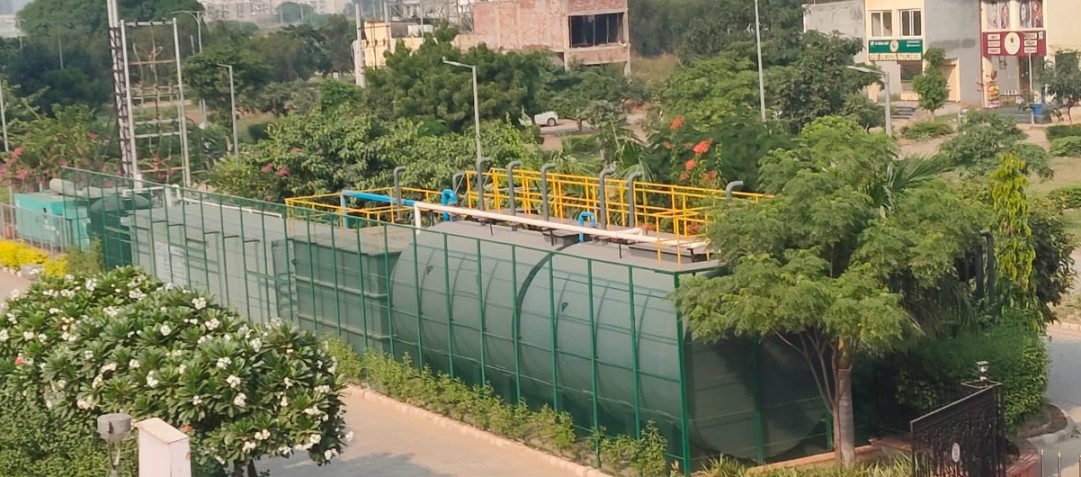
Defence & Paramilitary STP Installations
STPs for armed forces formations and paramilitary installations requiring military engineering specifications (MES standards), security-cleared access, and fast-track commissioning timelines.
Packaged Systems
Packaged & containerised MBR STP units
Pre-engineered, skid-mounted or containerised MBR-based STPs from 10 KLD to 500 KLD — using SRPEPL's own AEROFLO MBR membranes. Minimal civil works required. Typically commissioned within 8–16 weeks from order.
Contract Scope
What is included in SRPEPL's turnkey STP scope?
SRPEPL delivers STPs under turnkey EPC, Design-Build-Operate (DBO) and hybrid annuity models. The typical turnkey EPC scope covers process design through trial run and performance guarantee.
Contract Models
How SRPEPL delivers STP projects
SRPEPL offers three contract models — from lump-sum turnkey EPC through full Design-Build-Operate with multi-year performance guarantees.
Differentiators
Why SR Paryavaran Engineers is chosen for STP projects
Frequently Asked Questions
STP design, EPC and operations — common questions
SRPEPL designs and builds STPs using MBR (Membrane Bioreactor), SBR (Sequential Batch Reactor), MBBR (Moving Bed Biofilm Reactor) and extended aeration / conventional ASP configurations. Technology is selected based on site-specific factors — land availability, treated-water reuse requirements, sewage flow variability and lifecycle cost. Capacities range from 10 KLD packaged MBR units to 50+ MLD municipal plants under central and state government missions.
SRPEPL has delivered 450+ packaged MBR-based STPs for institutional, defence, commercial and residential clients across India. The anchor municipal reference is the AMRUT Panchkula and Gurugram project — 15 STPs and 100 km of sewerage pipeline, ₹75 Cr, for Haryana Urban Local Bodies under the AMRUT mission. SRPEPL also delivers STPs for the Army Welfare Housing Organisation (AWHO), Indian Railways, and private-sector clients.
Yes. SRPEPL manufactures AEROFLO MBR flat-sheet membrane elements at two facilities in India — at the Panchkula, Haryana headquarters and at HPSIDC Baddi, Himachal Pradesh — through its manufacturing brand, SRP Membranes (srpmembranes.com). These in-house membranes are used in all SRPEPL MBR-based STP projects and are also sold separately to third-party EPC contractors and system integrators. The company has commissioned over 150,000 membrane elements to date.
SRPEPL delivers STPs under three contract models: turnkey EPC (lump-sum, typically including process design through commissioning and defect liability), Design-Build-Operate (DBO) with multi-year O&M for 3–10 year terms with per-KL performance guarantees, and hybrid annuity. Municipal contracts under AMRUT, SBM(U) and Namami Gange typically include civil works within EPC scope. Institutional and industrial contracts often exclude civil.
STP designs are anchored to CPCB 2017 sewage discharge norms (notification S.O. 1533(E) dated 13 June 2017) prescribing BOD ≤ 10 mg/L and TSS ≤ 20 mg/L for metropolitan cities. The company's design practice references the CPHEEO Manual on Sewerage and Sewage Treatment Systems (2013 revision) and IS 10500:2012 where treated sewage is directed to potable augmentation. SRPEPL is certified to ISO 9001:2015, ISO 14001:2015 and ISO 45001:2018.
Yes. SRPEPL delivers pre-engineered, skid-mounted or containerised MBR-based STPs from 10 KLD to 500 KLD. These packaged systems use SRPEPL's own AEROFLO MBR membranes, require minimal civil works, and are typically commissioned within 8–16 weeks from order. They are deployed for institutional campuses, defence formations, construction sites, highway rest areas, and any application where land is constrained and fast deployment is needed.
Yes. SRPEPL offers long-term STP operations under DBO (Design-Build-Operate) and annuity contract models, typically for 3–10 year terms. O&M scope covers daily plant operation, chemical procurement and dosing, membrane cleaning (CEB/CIP), sludge handling and disposal, SCADA monitoring, regulatory sampling and reporting, and performance guarantee compliance. The company maintains five regional after-sales offices across India to support operated plants.
For municipal, institutional, industrial or defence STP projects, use the enquiry form on our Contact page, email info@srpepl.com, or call/WhatsApp +91 98759 55948. For export-market enquiries, contact our Dubai office at sidhant@srpepl.com. For direct MBR membrane procurement, visit srpmembranes.com. SRPEPL's process design team reviews site data, maps the treatment train, and produces a preliminary scope and estimate as part of the enquiry response.
Discuss your STP requirement with our engineering team
For municipal, institutional, industrial or defence STP projects — from a 10 KLD packaged MBR unit to a 50 MLD mission-funded programme — share your requirement and our process design team will review site data, map the treatment train, and produce a preliminary scope and estimate.