

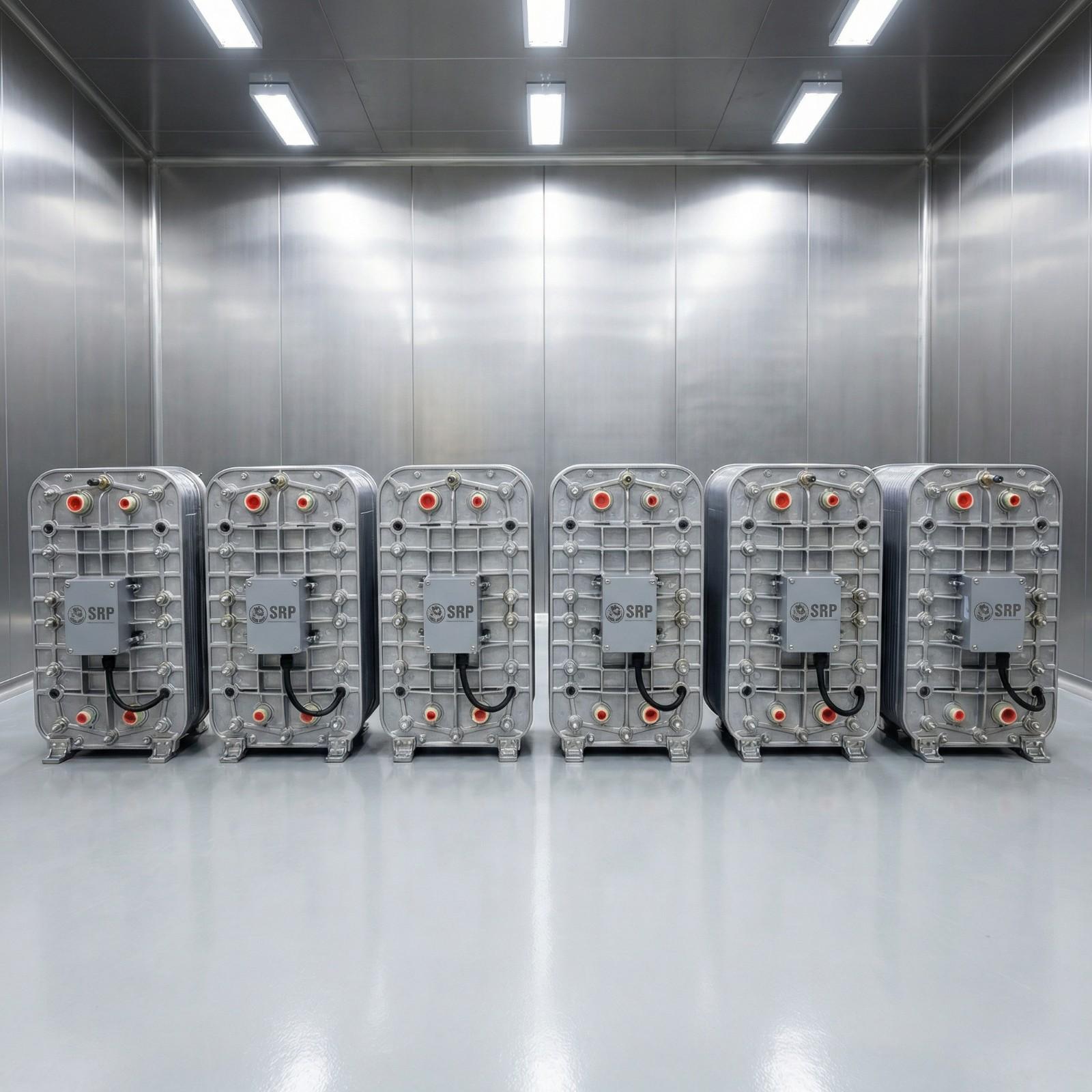
What medical device water needs
Medical device manufacturers use deionised or purified water for cleaning, rinsing, component washing and as a feed to higher grades. The water must hold its specification continuously, not only at the treatment outlet.
SR Paryavaran Engineers builds RO, EDI and UV trains with sanitisable loops, on EPC, DBO or O&M terms.
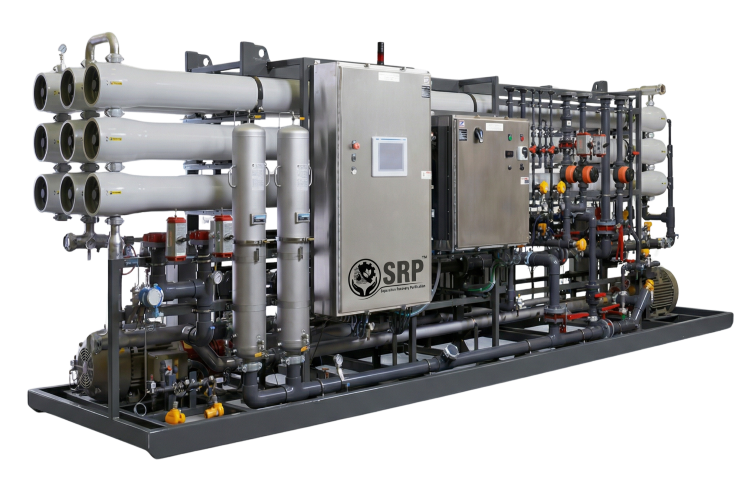
How purity steps down through the train
Conductivity falls at each stage. The loop then has to hold it there.
Indicative typical values on a log scale for context, not a performance guarantee. Real results depend on feed water and operating conditions.
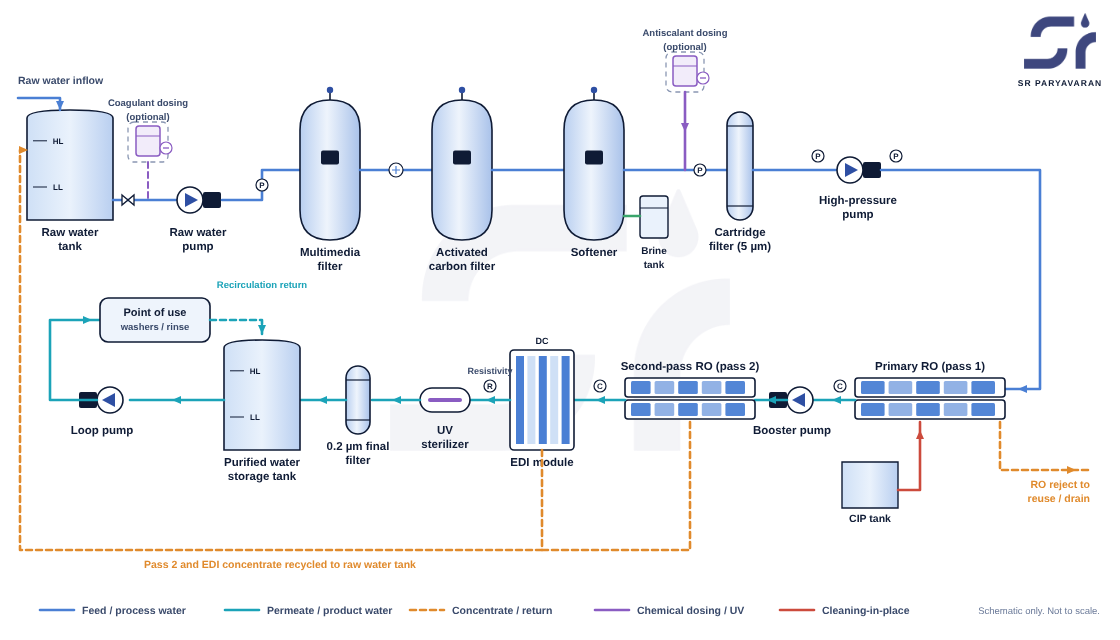
What the water must meet
Typical pharmacopoeial figures for context; your validated process sets the real limit.
| Parameter | Typical purified water limit | Control point |
|---|---|---|
| Conductivity | ≤1.3 µS/cm at 25 °C (stage 1) | Double-pass RO and EDI |
| Total organic carbon | ≤500 ppb | Carbon, RO and UV |
| Microbial count | Action level typically 100 CFU/mL | UV, 0.2 µm and loop sanitisation |
| Endotoxin (WFI only) | ≤0.25 EU/mL | Distillation or equivalent, plus loop design |
| Materials of construction | Sanitary, smooth and documented | Stainless steel or sanitary polymer piping |
| Documentation | Traceable and audit-ready | Material certificates and instrumentation records |
Deionised, purified or WFI?
| Grade | Typical production | Typical use | Note |
|---|---|---|---|
| Deionised (DI) | RO plus ion exchange or EDI | Rinsing, general cleaning | Low conductivity but microbial control needs the loop |
| Purified water | Double-pass RO plus EDI, UV, 0.2 µm | Component cleaning, many device processes | Pharmacopoeial limits apply |
| Water for injection (WFI) | Distillation or equivalent | Parenteral and critical rinse steps | Endotoxin limit and hot loop |
Where purified water is used
Across the device manufacturing floor.
How SRPEPL delivers a purified water system
Six steps from your specification to a documented loop.
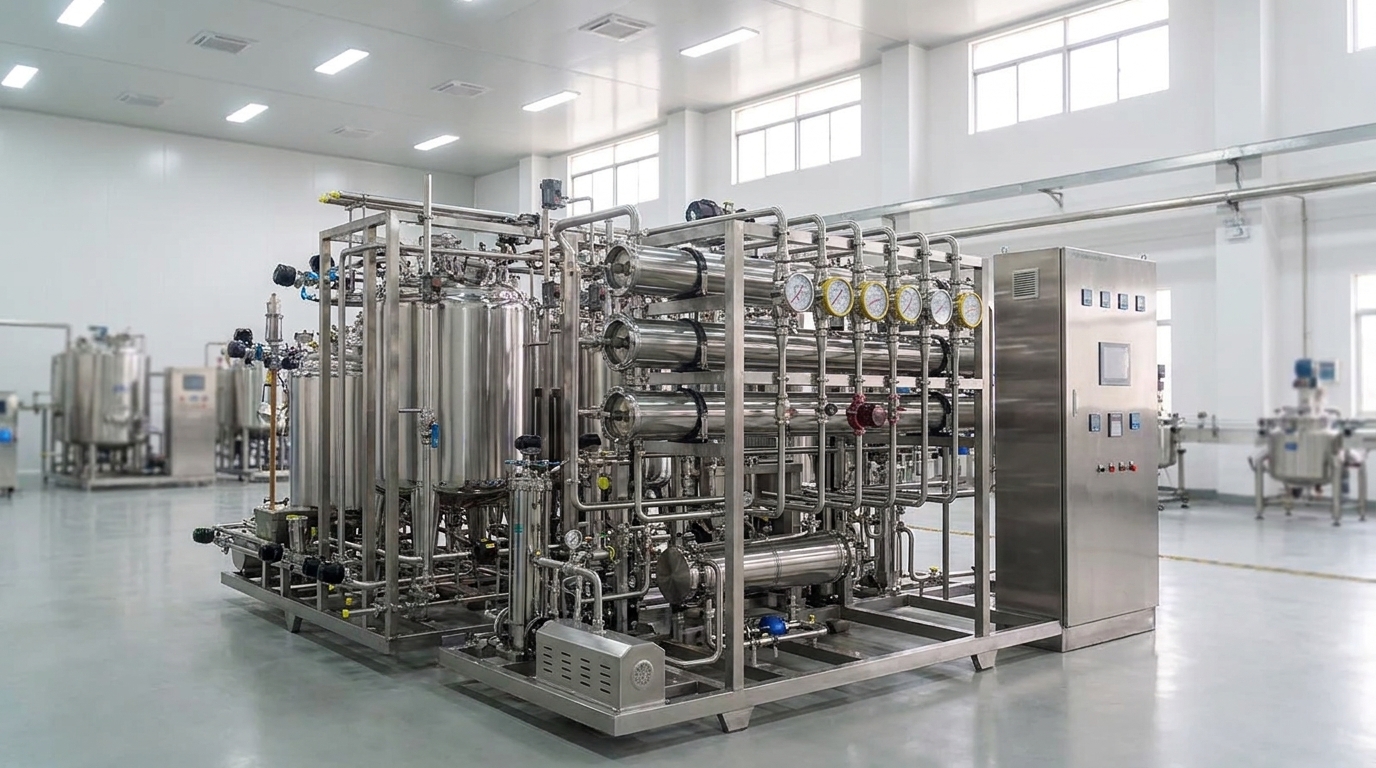
Engineering backed by manufacturing
Frequently Asked Questions
DI Water for Medical Devices — common questions
Deionised water has had its dissolved ions removed by ion exchange or electrodeionisation, giving very low conductivity. In medical device manufacturing it is used for cleaning, rinsing and as a feed to higher-grade water.
USP purified water is limited in conductivity (the three-stage test, with a stage-one limit of 1.3 microsiemens per cm at 25 °C), total organic carbon (500 ppb or lower) and microbial count (an action level commonly set at 100 CFU per mL). Always confirm against the current pharmacopoeia.
A typical train uses multimedia and carbon filtration, softening, double-pass reverse osmosis, electrodeionisation, UV and a 0.2 micron filter, followed by a sanitisable recirculating loop. The exact train depends on feed water and the grade needed.
Most contamination arises after treatment. A continuously recirculating loop with smooth welded stainless steel or sanitary piping, no dead legs and periodic sanitisation, hot or ozone, prevents biofilm and keeps the water within specification.
No. WFI is a higher grade with an endotoxin limit of 0.25 EU per mL and is produced by distillation or an equivalent membrane process. Many device processes use purified water; the required grade is set by your validated process.
SR Paryavaran Engineers designs and builds the water system with documentation, materials and instrumentation suited to regulated plants, delivered on EPC, DBO or O&M terms. Validation protocols and the final quality-system responsibilities stay with the manufacturer.
Share your water specification for a train proposal
Send the grade required, daily demand, peak flow and the standards your quality system follows. Our engineers will propose the train and loop.
Related