




Solution Overview
Four buyer scopes — one engineering team
SR Paryavaran Engineers designs, manufactures, installs and operates drinking water treatment plants across four buyer scopes — community and rural water supply under state government programmes, urban municipal drinking water for Urban Local Bodies, institutional plants for railways, defence, townships and hospitality, and commercial packaged drinking water plants under IS 14543 / IBC norms.
Every plant is engineered to deliver water meeting IS 10500:2012 acceptable limits, with treatment trains selected from RO, UF, fluoride-removal, arsenic-removal, iron and manganese removal, ion exchange and disinfection — matched to the source water at the site. Over 3,500 community plants have been delivered across Punjab, Rajasthan, Karnataka and Maharashtra alone, on packaged-RO and UF+RO architectures manufactured in-house.
Compliance Spine
What does a drinking water plant in India have to comply with?
A drinking water plant must produce water meeting the 48 parameters specified by IS 10500:2012 — Bureau of Indian Standards Drinking Water Specification — within the acceptable limits. The standard applies to municipal supply, institutional supply and packaged drinking water. Packaged drinking water carries an additional standard, IS 14543, administered under a BIS certification scheme. Compliance is verified through accredited laboratory testing on a defined sampling protocol.
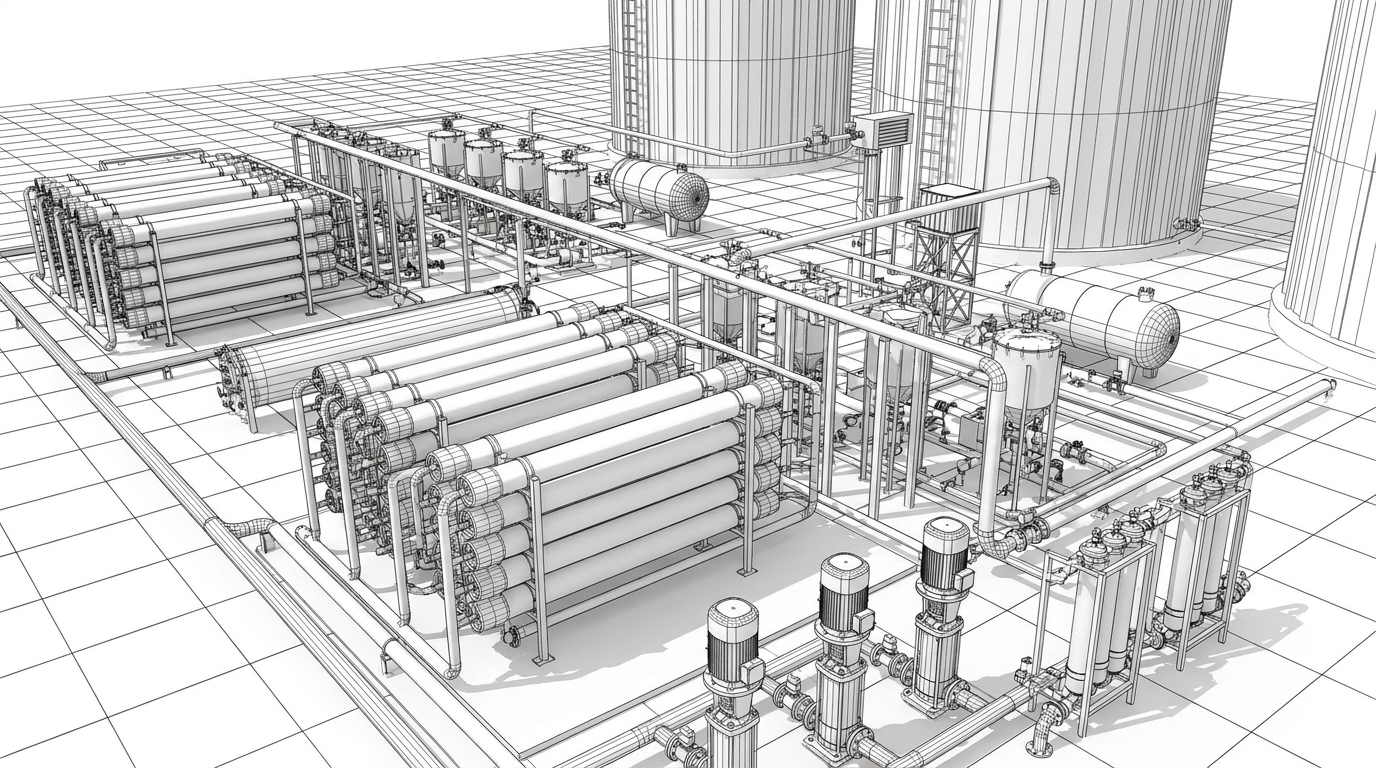
| Parameter | IS 10500:2012 acceptable limit | Primary treatment route |
|---|---|---|
| Total Dissolved Solids (TDS) | 500 mg/L | Reverse osmosis (RO) |
| Total hardness (as CaCO₃) | 200 mg/L | RO or ion exchange softening |
| Fluoride | 1.0 mg/L (permissible 1.5) | RO or adsorption (activated alumina, Nalgonda) |
| Arsenic | 0.01 mg/L | Adsorption, coagulation or RO |
| Iron | 0.3 mg/L | Oxidation + filtration |
| Manganese | 0.1 mg/L | Oxidation + filtration |
| Turbidity | 1 NTU (permissible 5) | Coagulation, filtration, UF |
| Nitrate | 45 mg/L | Ion exchange or RO |
| Total coliforms | Absent in 100 mL | Disinfection (Cl₂, UV, O₃) |
| E. coli | Absent in 100 mL | Disinfection (Cl₂, UV, O₃) |
Source Water → Treatment Train
Which source water gets which treatment?
Treatment selection depends on the source water archetype. The matrix below maps four common groundwater and surface-water types to the applicable treatment routes.
| Treatment route | Surface water Low TDS, high turbidity |
Brackish groundwater High TDS ± fluoride/iron |
High-fluoride groundwater >1.5 mg/L F⁻ |
Iron & manganese GW Fe >0.3, Mn >0.1 mg/L |
|---|---|---|---|---|
| Coagulation + sand filtration | — | — | — | |
| Ultrafiltration (UF) | (pre-RO) | — | — | |
| Reverse osmosis (RO) | — | — | ||
| Adsorption — fluoride / arsenic | — | — | (alt. to RO) | — |
| Oxidation + multimedia filtration | — | — | — | |
| Disinfection — Cl₂ / UV / O₃ | Always | Always | Always | Always |
Surface water with low TDS and high turbidity is treated by coagulation, sand filtration and ultrafiltration, followed by disinfection. Brackish groundwater above 500 mg/L TDS requires reverse osmosis, with UF pre-treatment where the raw water has high colloidal load. High-fluoride groundwater above 1.5 mg/L is treated by RO or by adsorption on activated alumina, depending on plant scale and OPEX constraints; iron and manganese above the IS 10500 limits are removed by oxidation followed by multimedia filtration.
Treatment Technologies
Six core technologies — and how SRPEPL deploys them
SRPEPL deploys six core treatment technologies for drinking water. Most plants combine two or more into a treatment train sized against the source water at site. Membrane elements — RO and UF — are manufactured in-house.
Buyer Scope 1
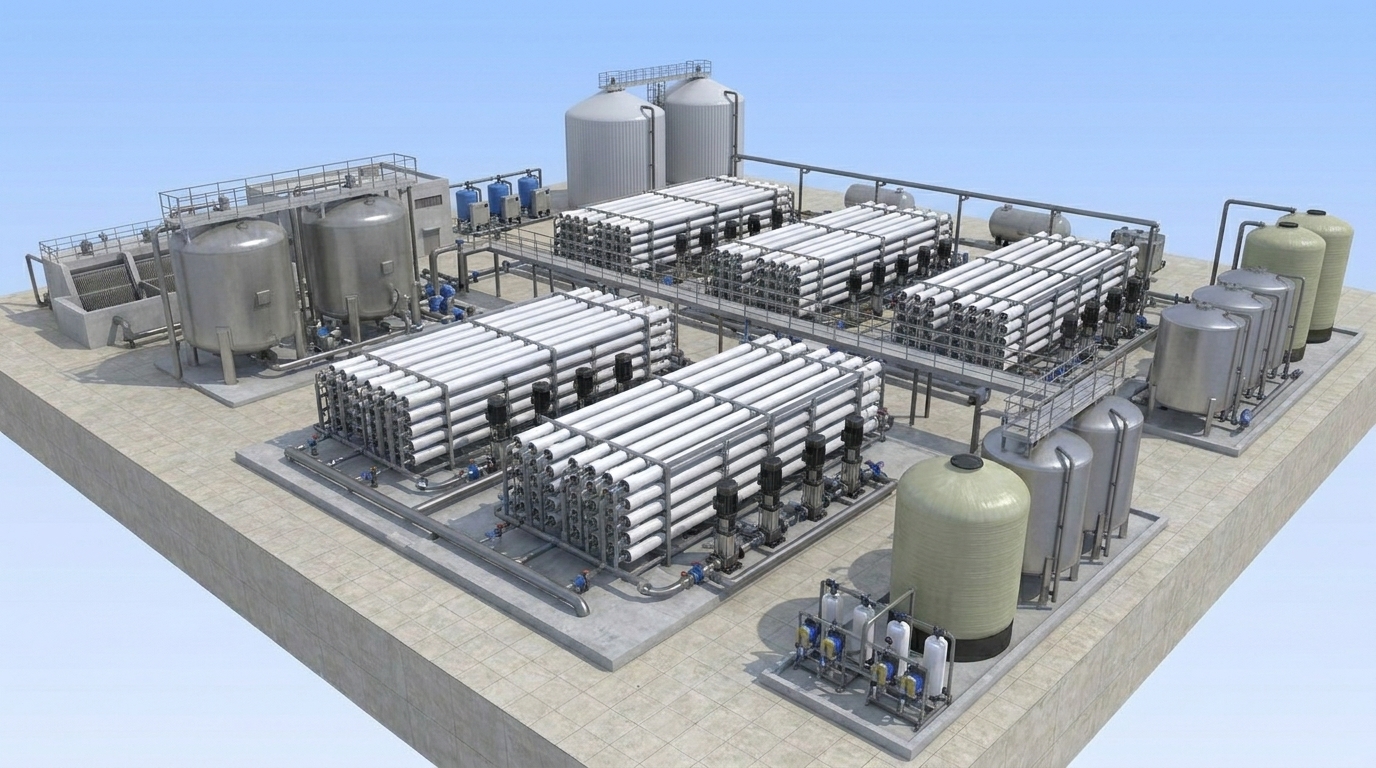
Community and rural drinking water plants — 3,500+ delivered
SRPEPL has delivered more than 3,500 community and rural drinking water plants across India under state government and PHED programmes — typically 250 LPH to 5,000 LPH packaged RO, UF+RO and fluoride-mitigation units. Plants are designed, manufactured, installed and, in several programmes, operated under multi-year DBOT or O&M contracts.
at peak operations
Buyer Scope 2
Urban municipal drinking water plants (DWTPs) for ULBs
Urban DWTPs treat surface water from rivers, canals or reservoirs — or blended surface and groundwater — to deliver potable water to city-scale distribution networks. SRPEPL designs DWTPs with conventional treatment trains and, where source quality demands, additional membrane stages.
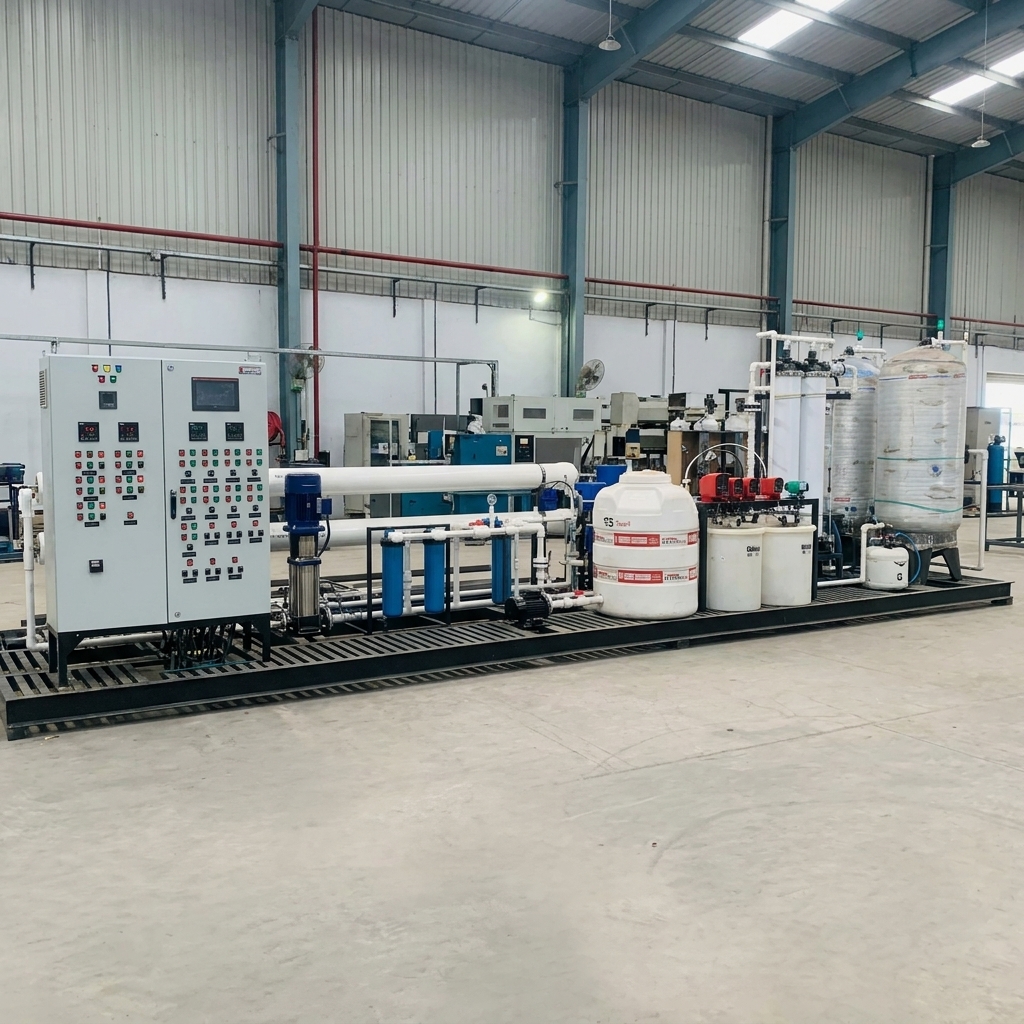
Typical municipal DWTP EPC scope
Buyer Scope 3
Institutional drinking water plants
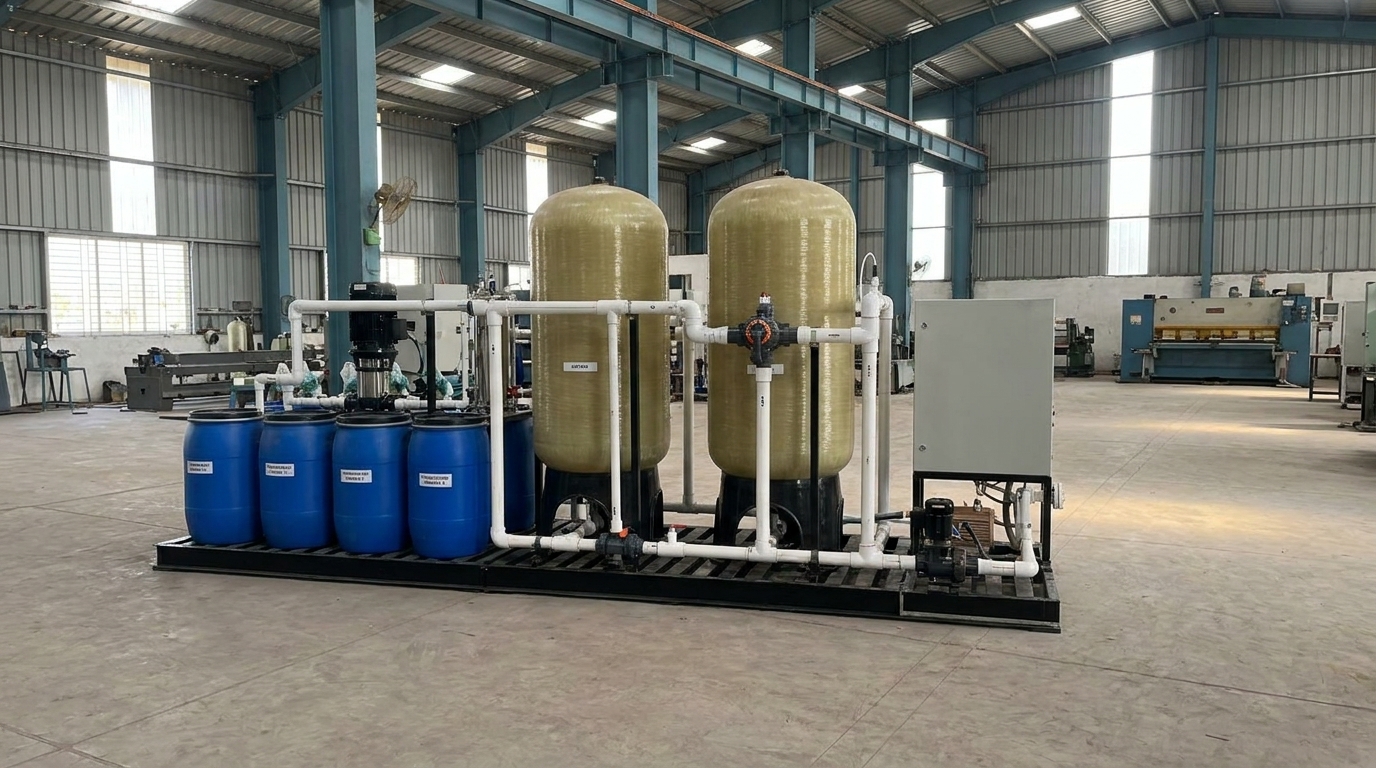
Institutional drinking water plants serve a building, campus, station or formation rather than a public distribution network. SRPEPL has delivered institutional plants for railways, defence, hospitality, hospitals and education campuses. Typical capacities: 500 LPH to 50 m³/hr (12 KLD to 1,200 KLD).
Buyer Scope 4
Commercial packaged drinking water plants — IS 14543 / IBC
Packaged drinking water plants are commercial bottling units that produce sealed, labelled drinking water for retail sale under IS 14543 — administered by the Bureau of Indian Standards under its certification scheme. SRPEPL designs and supplies the full water treatment plant section of a packaged drinking water unit — raw-water reception, treatment train (typically UF + RO + post-treatment), ozonation, storage and bottling-line feed — engineered to comply with the chemical, microbiological and radiological parameters specified in IS 14543.
IS 14543 vs IS 10500 — key differences
Frequently Asked Questions
Drinking water treatment plants — common questions
Drinking water in India must meet IS 10500:2012 — the Bureau of Indian Standards Drinking Water Specification — covering 48 chemical, microbiological and radiological parameters. The standard applies to municipal supply, institutional supply and, after additional IS 14543 compliance, to packaged drinking water. Compliance is verified through accredited laboratory testing of treated water on a defined sampling protocol. SRPEPL designs every drinking water plant to deliver water within the IS 10500:2012 acceptable limits.
Fluoride above the IS 10500:2012 permissible limit of 1.5 mg/L is removed by one of two main routes — reverse osmosis (RO), which delivers >95% fluoride rejection alongside TDS and broad-spectrum contaminant removal, or adsorption on activated alumina, hybrid media or other defluoridation media. RO is preferred where multiple parameters need to be addressed and where reject can be managed. Adsorption is preferred for smaller community plants where fluoride is the only out-of-spec parameter and OPEX needs to be minimised. SRPEPL has delivered approximately 226 fluoride-mitigation units in Punjab using both technology routes.
SRPEPL has cumulatively delivered more than 3,500 community drinking water plants across India — approximately 1,200 packaged RO plants and 1,070 decentralised units (including 226 fluoride-mitigation) in Punjab, more than 600 village UF and RO plants in Rajasthan including 225 across six districts under PHED, 582 DBOT installations in Karnataka, and 108 solar-powered RO plants in Maharashtra. At peak operations, SRPEPL-installed community systems served more than 5 million people daily with IS 10500:2012-compliant water.
A drinking water plant produces water for direct consumption or distribution — community supply, institutional buildings, municipal networks. A packaged drinking water plant produces water that is sealed in bottles or pouches for retail sale, and is governed by IS 14543 under a certification scheme administered by BIS. Packaged drinking water plants typically include ozonation as the terminal disinfection stage, do not carry a chlorine residual, and include additional documentation and material-of-construction requirements to support BIS audits.
Iron above 0.3 mg/L and manganese above 0.1 mg/L are removed by oxidation followed by multimedia filtration. Oxidation is achieved by aeration, chlorination, or dosing potassium permanganate or ozone, depending on the form and concentration of iron and manganese in the source water. The oxidised metals precipitate as insoluble hydroxides or oxides and are removed by gravity or pressure multimedia filtration. SRPEPL sizes the oxidation contact time and filter loading against actual site water — a generic design loading is not used because Fe/Mn chemistry varies significantly between groundwater sources.
Yes. SRPEPL has deployed 108 solar-powered RO drinking water plants in Maharashtra for community water supply at village sites where grid power is unreliable or unavailable. Solar configuration is sized to the plant's combined load — RO high-pressure pump, dosing pumps and disinfection — with either battery backup or direct-drive operation matched to the daily demand profile. Solar power is also offered as an option on community, institutional and remote-site plants outside the Maharashtra programme.
Reverse osmosis recovery on community drinking water plants is typically 50% to 75% — meaning 50–75% of the feed water passes through the membrane as treated permeate, and the remainder is rejected as concentrate. Recovery depends on the feed water TDS, the IS 10500:2012 quality target on the permeate, and the membrane selection. Reject is either disposed of under local norms (typically a soak pit, evaporation pond or surface drain on small plants) or partially recycled through pre-treatment on larger installations. Reject management is engineered to the site, not assumed.
In several programmes, yes — SRPEPL has executed community drinking water plants under Design-Build-Operate-Transfer (DBOT) contracts where the company is responsible for operation for a defined period after commissioning. In other programmes, the plants are supplied or built under EPC and handed over to the state or municipal client for operation. Multi-year chemical and mechanical O&M can be contracted separately on any drinking water plant SRPEPL delivers, irrespective of the original procurement model.
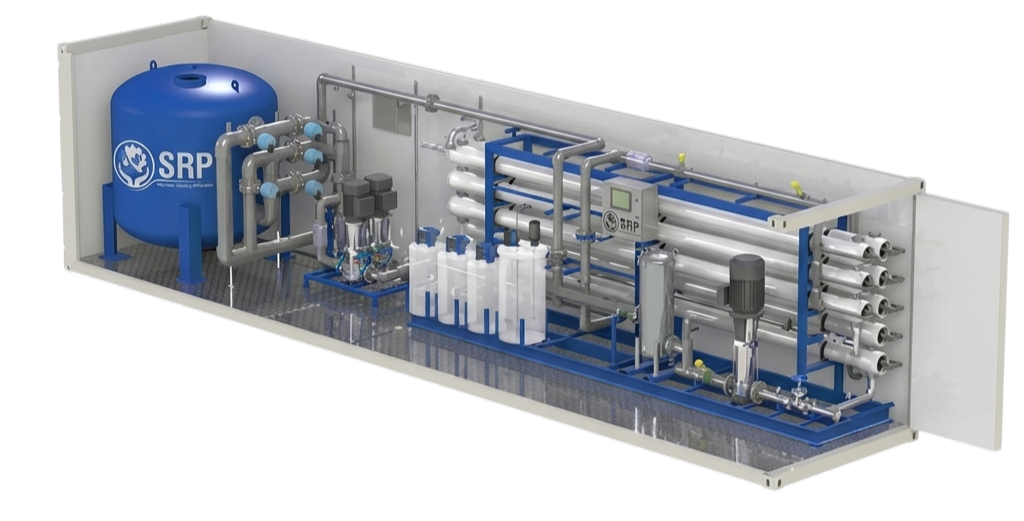
Site installation timelines depend on plant configuration (containerised vs civil-housed), site readiness (foundations, power, raw-water source), and the programme's contractual schedule. Containerised and skid-mounted packaged RO plants — the dominant configuration in SRPEPL's Punjab, Rajasthan and Maharashtra community deployments — are pre-assembled at the Panchkula or Baddi facility and require only mechanical and electrical connection at site, materially compressing the install-to-commission timeline relative to a built-up civil plant.
Request a drinking water plant consultation
Share your source water analysis and IS 10500:2012 compliance target — our engineering team will map a treatment train against your actual feed, whether it is community, municipal, institutional or packaged.
Continue Exploring