

Hello There!

Lorem ipsum dolor sit amet, consectetur adipiscing elit,

Follow Us

Water & Wastewater Treatment for the Chemicals Industry | SR Paryavaran Engineers
Seawater desalination reverse osmosis plant
Home Industries Chemicals & Petrochemicals
Industry Solutions

Water and wastewater treatment for chemicals and petrochemicals

High-COD, high-TDS and chemically aggressive effluent streams — engineered, manufactured and operated by a specialist water company.

Chemical and petrochemical plants generate effluent that falls outside the standard treatment envelope. SRPEPL designs, manufactures and commissions water and wastewater systems engineered specifically for these streams — built around membranes we manufacture ourselves and pressure vessels we fabricate in-house.

35+
Years specialised focus
UHP
Above 80 bar — in-house built
200+
Resin heavy-metal removal systems
In-house
MBR, UF, RO & UHP manufacturing
5
Regional after-sales offices
Feed Characterisation

What chemical-plant effluents typically contain — and how we engineer for them

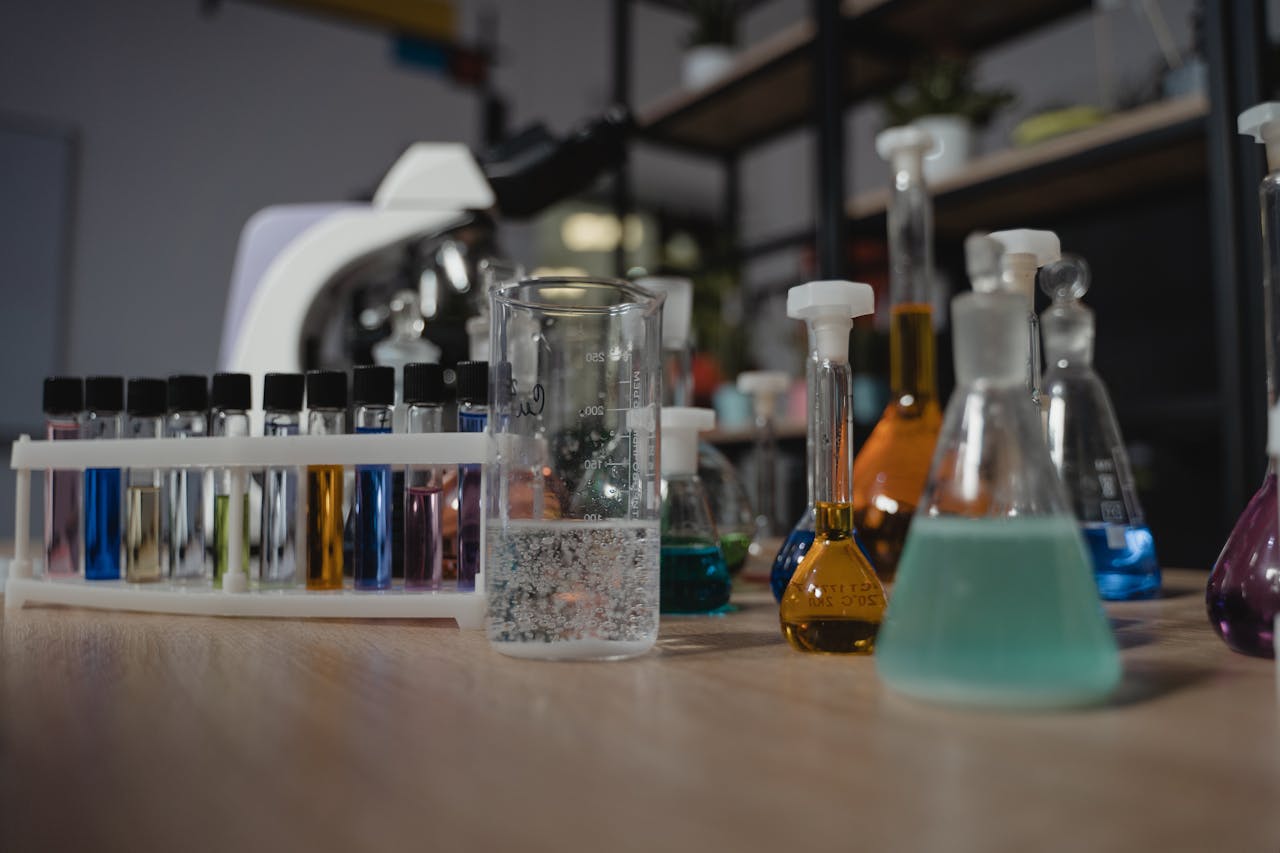
Effluent from a chemical or petrochemical plant rarely matches a single design point. Influent COD can swing from 2,000 to 30,000 mg/L across product campaigns; TDS sits anywhere from 5,000 to 60,000 mg/L; pH shifts batch-to-batch; heavy metals appear in trace but compliance-relevant concentrations; and surfactants, solvents and refractory organics make biological treatment alone insufficient. SRPEPL designs treatment trains around the actual feed envelope, not a nominal value — with equalisation upstream, redundancy through the train, and instrumentation that catches excursions before they reach the membrane stage.
2,000–30,000
COD variability (mg/L)
Swings across product campaigns — equalisation and redundant trains are standard design practice.
5,000–60,000
TDS range (mg/L)
From reaction salts and brine purge through to ZLD brine concentrations above 45,000 mg/L.
Variable
pH — batch-to-batch
Automated dosing and pH instrumentation ahead of every membrane stage. No relying on manual intervention.
Trace
Heavy metals
Compliance-relevant concentrations require dedicated ion-exchange or chelating-resin removal — not membrane alone.
Mixed
Organics, solvents, surfactants
Refractory organics and surfactants mean biological treatment alone is insufficient. Membrane polishing required.
Batch
Campaign-driven variability
Multi-product plants generate streams that change character by run — designed for, not worked around.
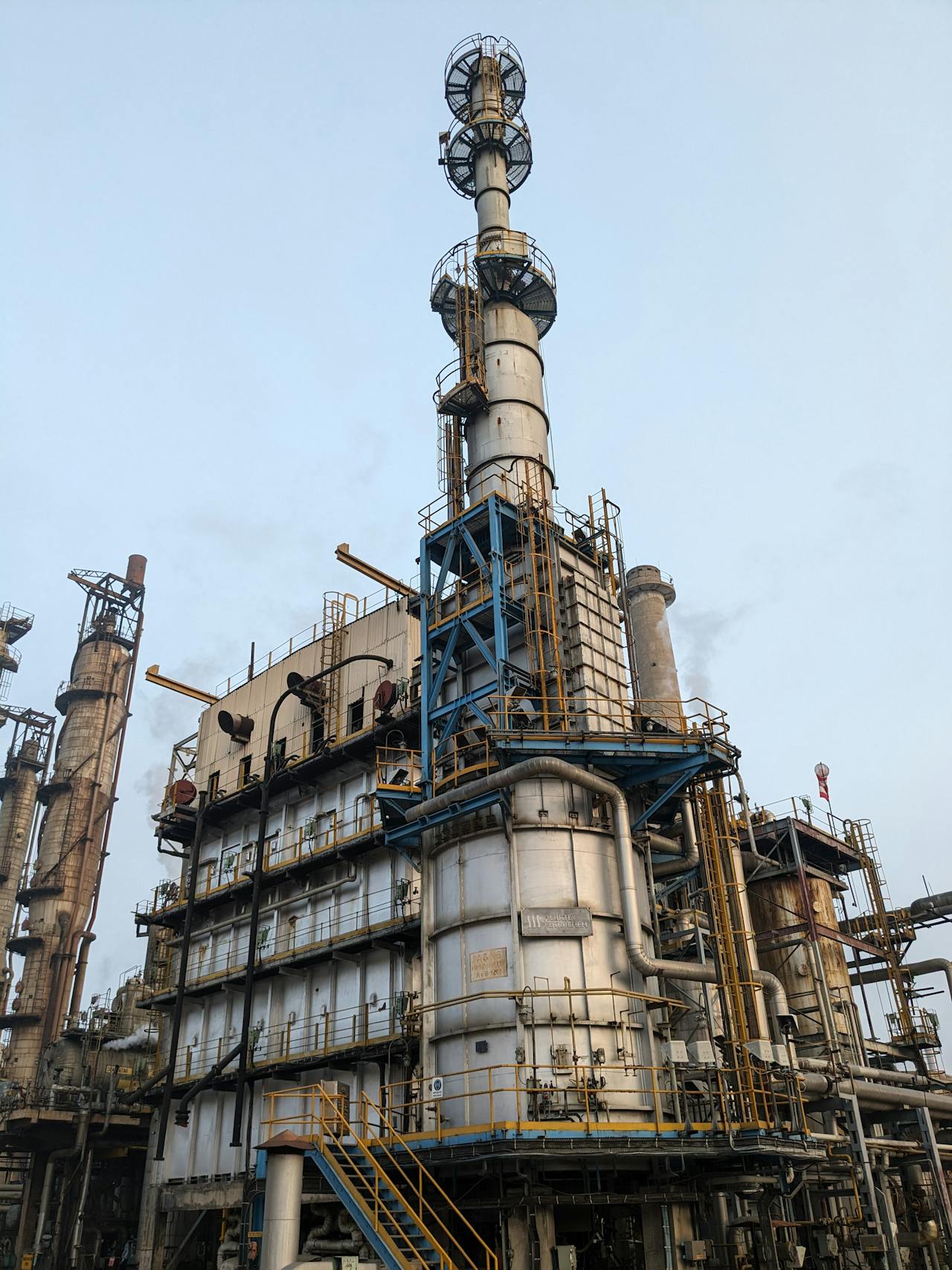
Chemical / petrochemical plant — ETP overview
Full Treatment Envelope

Our scope for chemical and petrochemical plants

Six capabilities, from incoming raw water through to zero liquid discharge — delivered under EPC, supply, or long-term O&M.

01
Effluent Treatment Plants (ETP)
Primary, biological and tertiary treatment for mixed chemical wastewater, with provision for COD/TDS variability and solvent recovery where applicable.
Primary separation AEROFLO MBR Biological Solvent recovery
02
Tertiary Treatment & Water Recycling (TTP)
RO and UF-based water recovery for boiler makeup, cooling tower makeup and process reuse, reducing fresh-water intake.
ULTRAFLO UF BW RO Boiler make-up Cooling tower reuse
03
Zero Liquid Discharge (ZLD)
Full membrane-plus-evaporation ZLD trains for sites under CPCB or state PCB ZLD directives, with brine concentration through UHP RO ahead of MEE or MVR.
UF + RO + UHP MEE / MVR Crystalliser CPCB compliant
04
Ultra-High-Pressure (UHP) Membrane Systems
For high-TDS reject polishing, brine concentration above standard RO pressure envelopes, and recovery of water from streams that conventional RO cannot economically handle.
>80 bar In-house built Exotic alloy vessels ZLD brine polishing
05
Resin-based Heavy-Metal Removal Systems
Ion-exchange and chelating-resin systems for compliance-driven removal of trace heavy metals from process and combined effluents.
Ion-exchange Chelating resin 200+ systems delivered CPCB compliance
06
Long-term Operations & Maintenance (O&M)
Multi-year chemical and mechanical O&M, supported by five regional after-sales offices across India.
3 / 5 / 10 year contracts 5 regional offices KPI-based MIS
Differentiating Capability

Why UHP RO matters for chemical and petrochemical effluent
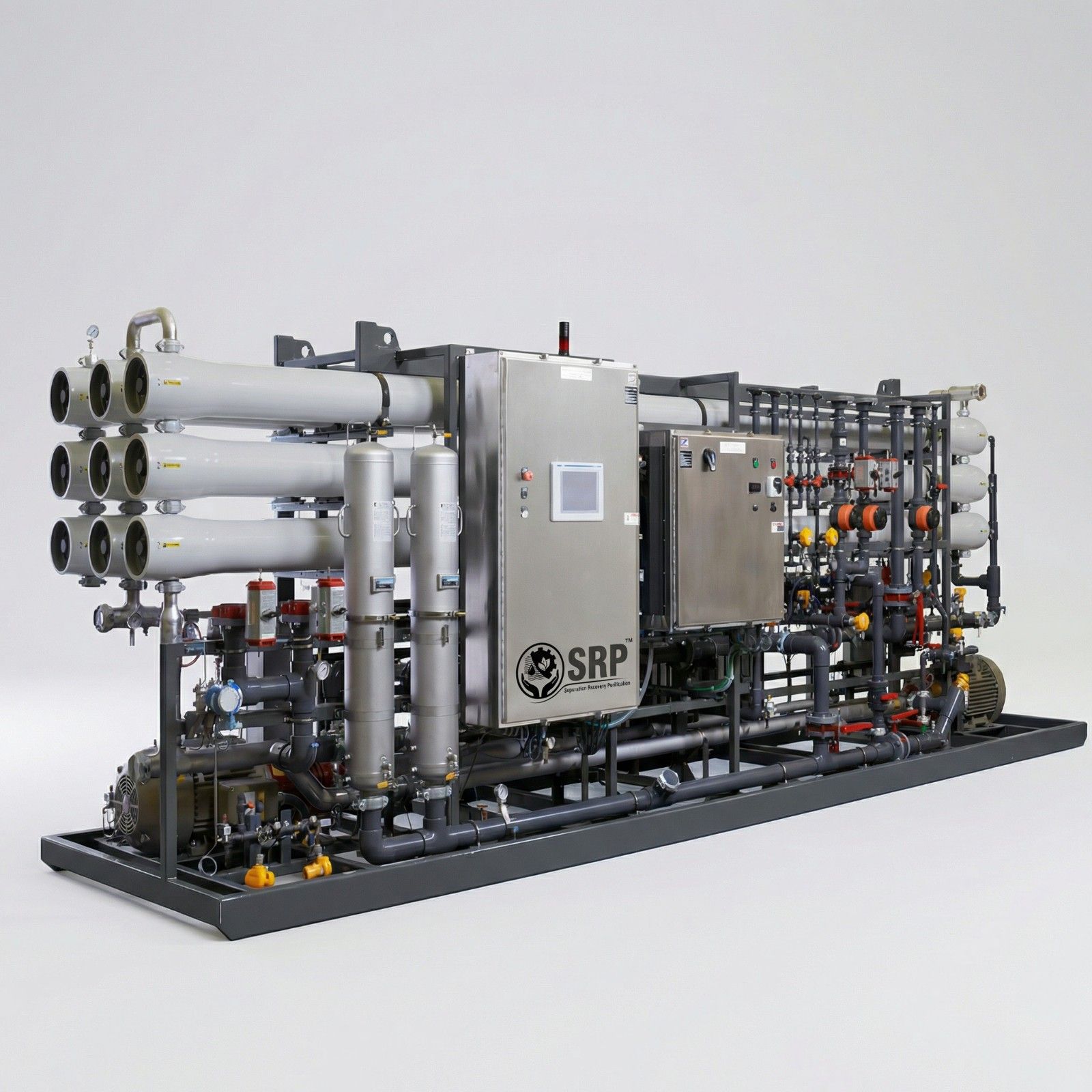
SRP UHP RO · >80 bar · In-house fabricated

Chemical-plant effluents often exceed the recovery and pressure envelope of standard RO — UHP is the membrane answer before thermal evaporation.

Chemical-plant effluents often exceed the recovery and pressure envelope of standard brackish-water RO. UHP systems operate above the ~80 bar limit and are deployed for ZLD brine concentration, RO reject polishing, and high-TDS organic effluents from chemical, petrochemical and specialty plants. SRPEPL manufactures UHP membrane elements in India and fabricates the high-pressure vessels and piping that house them.

Operates above the ~80 bar standard RO envelope
ZLD brine concentration before MEE/MVR — cuts thermal load
RO reject polishing for high-TDS organic streams
Vessels and piping in stainless steel, duplex and exotic alloys
Elements and complete skid designed by one team
In-house fabrication — no OEM dependency on the pressure side
UHP RO skid — high-pressure vessel assembly

The chemical sector is where SRPEPL's Ultra-High-Pressure membrane experience and refinery and petrochemical replacement-order depth are most relevant — these are the plants that test membranes against the hardest streams in industry.

Compliance Technology

Resin-based heavy-metal removal

Ion-exchange and chelating-resin systems are the right tool for compliance-driven removal of trace heavy metals from process and combined chemical effluents. Membranes alone do not reliably achieve the discharge limits required by CPCB and state PCB for metals like chromium, lead, zinc, nickel and cadmium. SRPEPL has delivered 200+ resin-based heavy-metal removal systems across India — the largest installed base for this technology outside specialist environmental contractors.
Ion-exchange resin systems
Cation and anion exchange for dissolved metal removal and water softening ahead of sensitive downstream processes.
Chelating-resin systems
Selective removal of trace heavy metals (Cr, Pb, Zn, Ni, Cd) to CPCB discharge norms — where membrane polishing alone is insufficient.
200+ systems delivered
Across India — chemical, electroplating, metal-finishing, battery and pharmaceutical sectors.
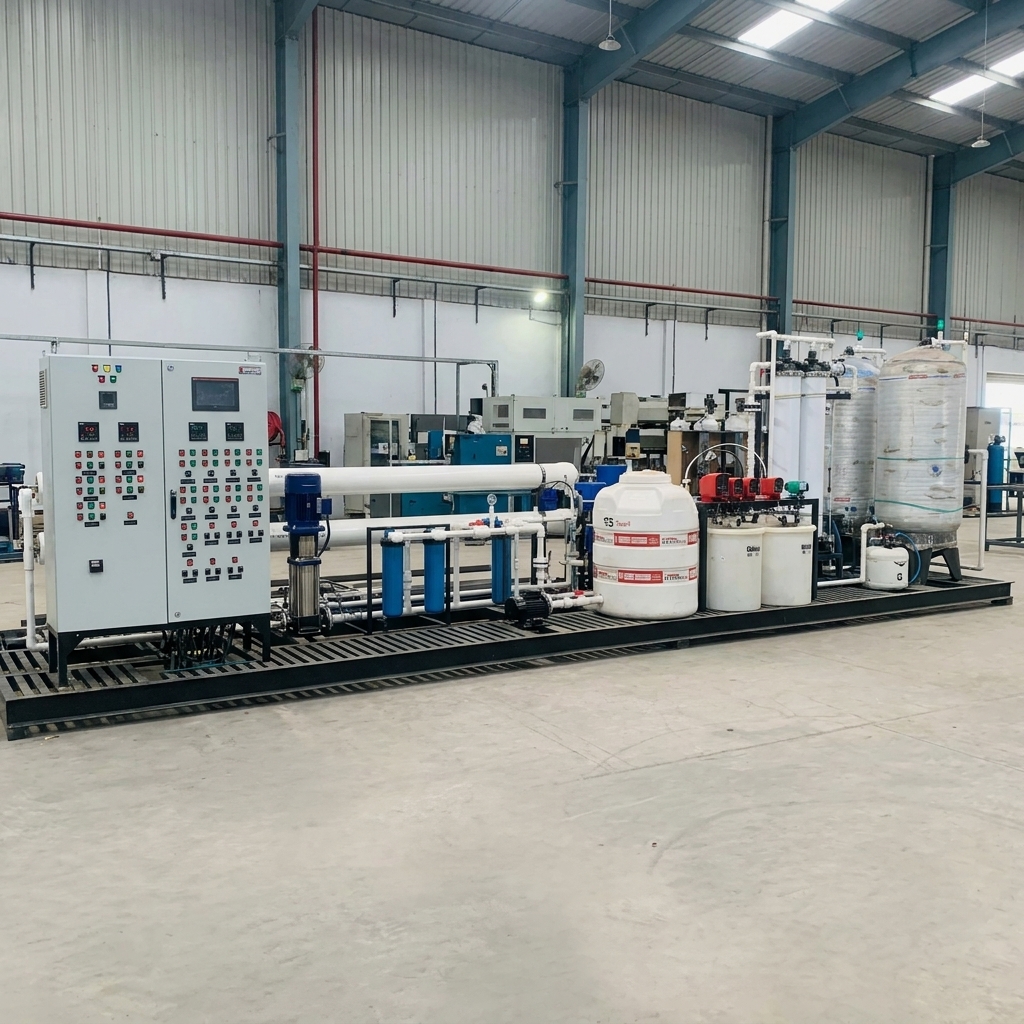
Resin column system — heavy-metal removal
200+ systems: SRPEPL's resin-based heavy-metal removal systems represent the largest installed base for this technology across India's chemical, electroplating, metal-finishing and pharmaceutical sectors.
Engineering for variability
Variability is engineered for at the design stage — not relied on as an operating exception.
SRPEPL's standard practice includes adequately sized equalisation tanks upstream of the biological and membrane stages, redundant trains where peak-load duty cycles demand it, pH and conductivity instrumentation with automated dosing, and CIP (cleaning-in-place) systems on every membrane stage. Where feed characterisation data is incomplete, we recommend a sampling and pilot phase before the design freeze.
Why SRPEPL

Manufactured in India. Engineered for the hardest streams.

Owned membrane technology
SRPEPL manufactures MBR, UF, RO and UHP membrane elements at two facilities in India. The same team designs the element and the skid — no split between membrane vendor and systems integrator. Critical technical decisions stay inside one engineering team.
In-house high-pressure fabrication
Pressure vessels, skids and high-pressure piping are fabricated in-house in stainless steel, duplex and exotic alloys. Chemical-plant duty demands material selection that a standard fabricator cannot make from a membrane vendor's spec sheet alone.
Refinery & petrochem track record
SRPEPL membrane elements are in regular replacement-order rotation at Indian refineries including MRPL and CPCL — streams comparable in difficulty to concentrated chemical effluent. Repeat orders are the authority signal that transfers directly to chemical-plant duty.
6,000+ systems · 35+ years
4,000+ UF and RO systems, 200+ resin heavy-metal removal systems, 450+ packaged MBR plants, multiple ZLD complexes — across 15+ states. A first-principles design approach applied across every sector and every feed chemistry.
6,000+
Systems delivered across India
200+
Resin heavy-metal removal systems
4,000+
UF & RO systems commissioned
S168
EIL enlistment code
ISO 9001:2015
ISO 14001:2015
ISO 45001:2018
EIL Enlisted S168
NSIC / MSME
Make-in-India
Common Questions

Frequently asked questions

SRPEPL designs treatment systems for the full range of effluent streams from chemical and petrochemical plants — high-COD organic streams, high-TDS inorganic streams (above 10,000 mg/L and into ZLD brine concentrations above 45,000 mg/L), heavy-metal-bearing streams, mixed solvent-water streams, and combined effluents from batch and continuous operations. Treatment trains are engineered against the actual feed envelope of the plant, including peak-load and excursion scenarios, rather than a single nominal influent value.

Chemical-plant effluents often exceed the recovery and pressure envelope of standard brackish-water RO. Membrane-based systems — UF, RO and Ultra-High-Pressure (UHP) RO — allow water recovery from streams that cannot be economically polished by evaporation alone. UHP systems specifically operate above the ~80 bar pressure envelope of standard RO and are deployed for ZLD brine concentration, RO reject polishing, and high-TDS organic effluents from chemical, petrochemical and specialty plants. SRPEPL manufactures UHP membrane elements in India and fabricates the high-pressure vessels and piping that house them.

Yes. SRPEPL has delivered multiple ZLD systems across industrial sectors, including projects in the integrated steel and thermal power industries. For chemical and petrochemical plants, ZLD trains are engineered around a membrane-plus-thermal architecture — pre-treatment, biological (where relevant), RO, UHP brine concentration, and evaporation through MEE or MVR — sized against the actual brine load and salt mix of the specific plant.

Variability is engineered for at the design stage rather than relied on as an operating exception. SRPEPL's standard practice includes adequately sized equalisation tanks upstream of the biological and membrane stages, redundant trains where peak-load duty cycles demand it, pH and conductivity instrumentation with automated dosing, and CIP (cleaning-in-place) systems on every membrane stage. Where feed characterisation data is incomplete, we recommend a sampling and pilot phase before the design freeze.

Continue Exploring

Related solutions & pages

Discuss your chemical plant water or effluent stream

Send us your effluent stream profile — COD, TDS, pH, solvent load, metals — and our engineers will map a treatment train against it and recommend whether UHP, ZLD or resin technology fits.

crm@srpepl.com  ·  +91 90565 26208  ·  srpepl.com  ·  srpmembranes.com
Export / GCC: crm@srpepl.com  ·  Jebel Ali Free Zone, Dubai