



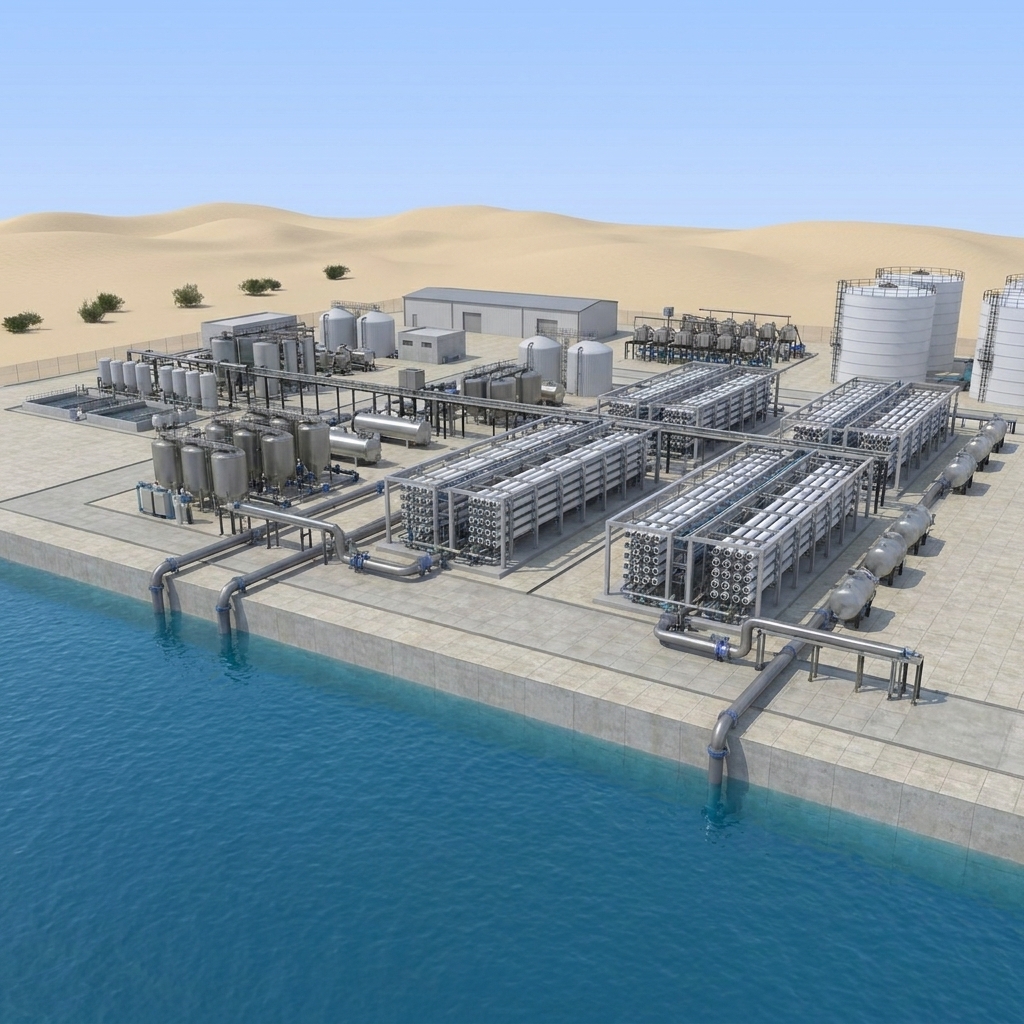
Overview
Membrane-based desalination — SWRO and BWRO, factory-built and export-ready
Desalination is the removal of dissolved salts from seawater or brackish water to produce potable or process-grade freshwater. Seawater Reverse Osmosis (SWRO) is the membrane-based technology that has replaced thermal methods (MSF, MED) in most new-build applications because of its lower specific energy consumption and smaller footprint.
SR Paryavaran Engineers designs, manufactures and commissions desalination plants — SWRO for seawater feeds up to 45,000 mg/L TDS and BWRO for brackish feeds up to 10,000 mg/L TDS — in containerised, skid-mounted and conventional configurations from 1 to 50 m³/hr per unit. SRPEPL manufactures its own SRP HP series high-pressure seawater RO elements and SRP BW series brackish-water RO elements at Panchkula, India, and has delivered over 4,000 packaged RO and UF systems including supplies to US Military installations through KBR.
Application Context
What is desalination, and when is a plant needed?
A desalination plant is needed wherever the available raw-water source is saline — seawater on coasts and islands, brackish groundwater in arid inland zones, or high-TDS industrial streams where freshwater recovery is economically justified. When the dissolved solids in the feed water exceed the limit acceptable for the intended end use, and no lower-TDS alternative source is available, desalination is the treatment.
Three demand segments in India
Treatment Architecture
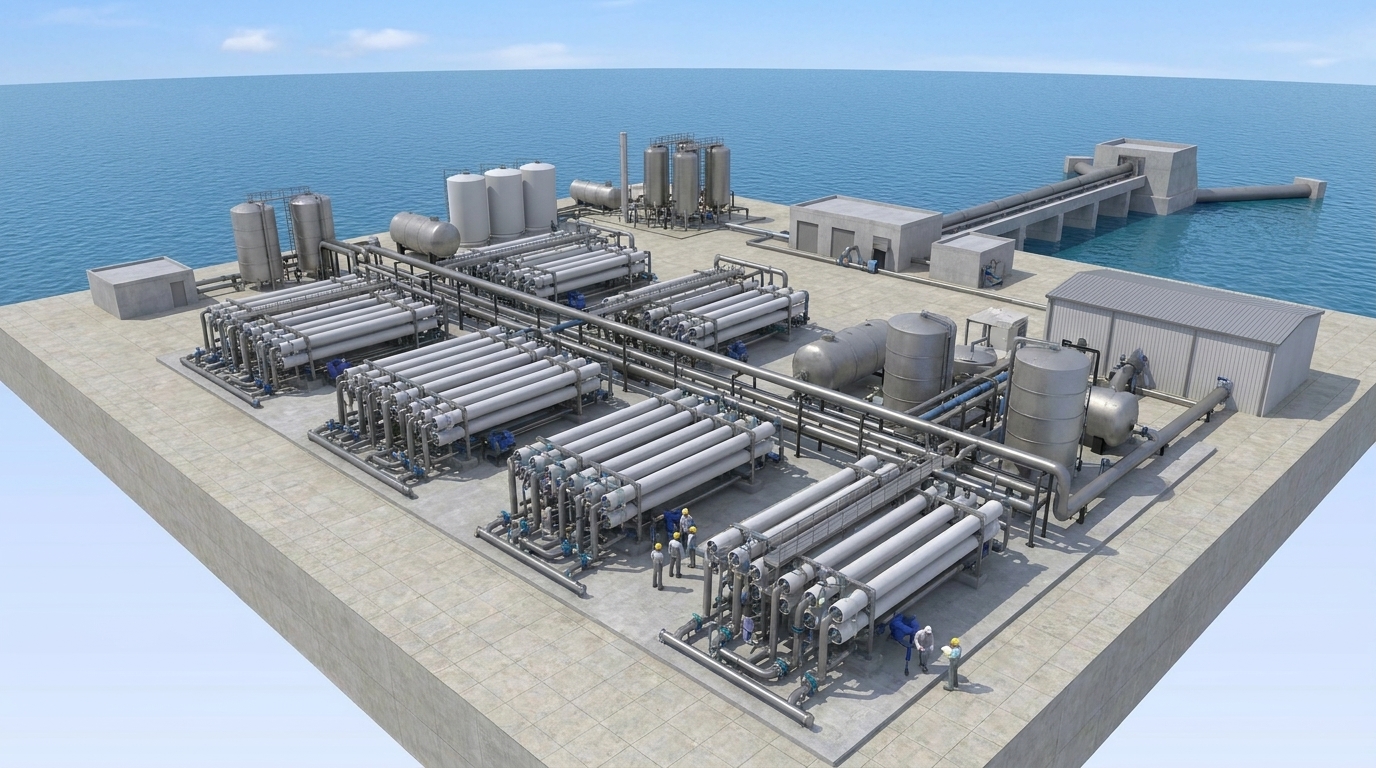
How SWRO and BWRO desalination plants work
A membrane-based desalination plant operates in four stages: intake and pre-treatment, high-pressure reverse osmosis, post-treatment, and brine management. Select the configuration below to see the full treatment train for each.
SWRO Treatment Train
BWRO Treatment Train
SWRO vs BWRO — key differences
Pre-treatment note
SRPEPL uses UF pre-treatment as standard on all SWRO — UF produces a consistently low SDI (<3) feed regardless of seasonal turbidity and algal blooms. Undersized pre-treatment is the most common root cause of poor SWRO performance.
Energy recovery (ERD)
ERDs recover energy from the high-pressure SWRO reject stream and transfer it to incoming feed — reducing specific energy from ~5–6 kWh/m³ to ~3–4 kWh/m³. SRPEPL includes ERDs as standard on all SWRO systems.
Post-treatment
SWRO permeate is essentially demineralised (TDS 100–500 mg/L) and corrosively aggressive — it needs remineralisation (lime or calcite contactor), pH adjustment, and disinfection before distribution. BWRO post-treatment is simpler.
Engineering Basis
Key design parameters for desalination plants
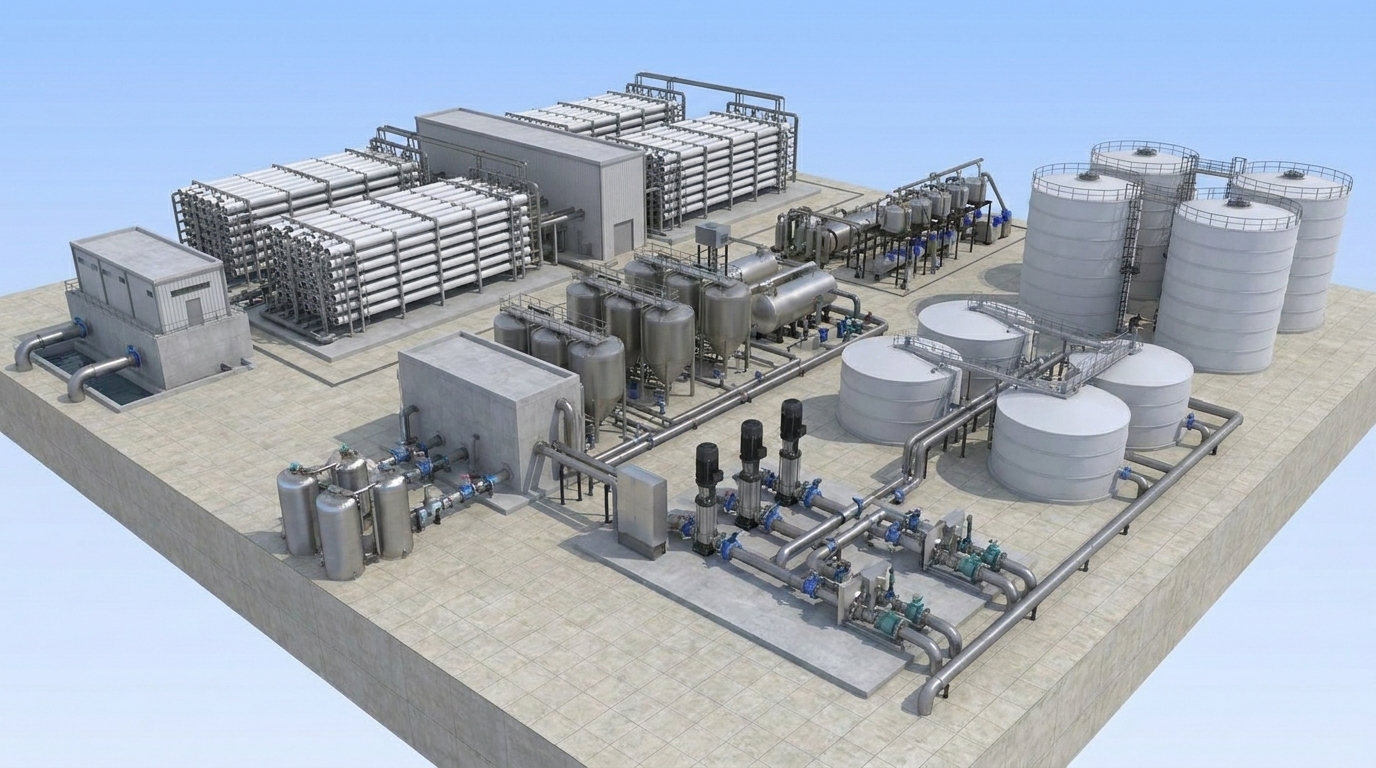
Desalination plant design is driven by five primary parameters: feed-water salinity (TDS), feed-water temperature, target product-water quality, recovery rate and specific energy. SRPEPL's design team prepares site-specific parameter sheets as part of RFQ response.
| Parameter | SWRO (Seawater) | BWRO (Brackish) | Design driver |
|---|---|---|---|
| Feed TDS | 25,000–45,000 mg/L | 500–10,000 mg/L | Determines operating pressure and membrane selection |
| Feed temperature | 15–35°C | 10–40°C | Higher temperature increases flux but accelerates fouling |
| Operating pressure | 55–70 bar | 15–25 bar | Must exceed osmotic pressure + membrane resistance |
| Recovery | 50–60% | 75–85% | Limited by osmotic pressure (SWRO) and scaling (BWRO) |
| Permeate TDS | 100–500 mg/L | 10–200 mg/L | Single-pass typical; two-pass for boiler-feed or UPW |
| Specific energy (with ERD) | 3–4 kWh/m³ | 0.8–1.5 kWh/m³ | ERD reduces SWRO energy by ~40% |
| Salt rejection | ≥99.5% | ≥97–99% | Membrane grade dependent |
| SDI feed requirement | <3 (after UF) | <5 (after MMF) | Measured at 15 min, 207 kPa |
| Membrane life | 5–7 years | 5–7 years | Feed quality and CIP discipline dependent |
Delivery Formats
Desalination plant configurations offered
SRPEPL delivers desalination plants in three form factors. All three share the same membrane technology and process engineering — the form factor is a function of site constraints, capacity and permanence.
Application Markets
Where SRPEPL desalination plants are deployed
Contract Scope
What's included in SRPEPL's desalination scope
Delivery Credentials
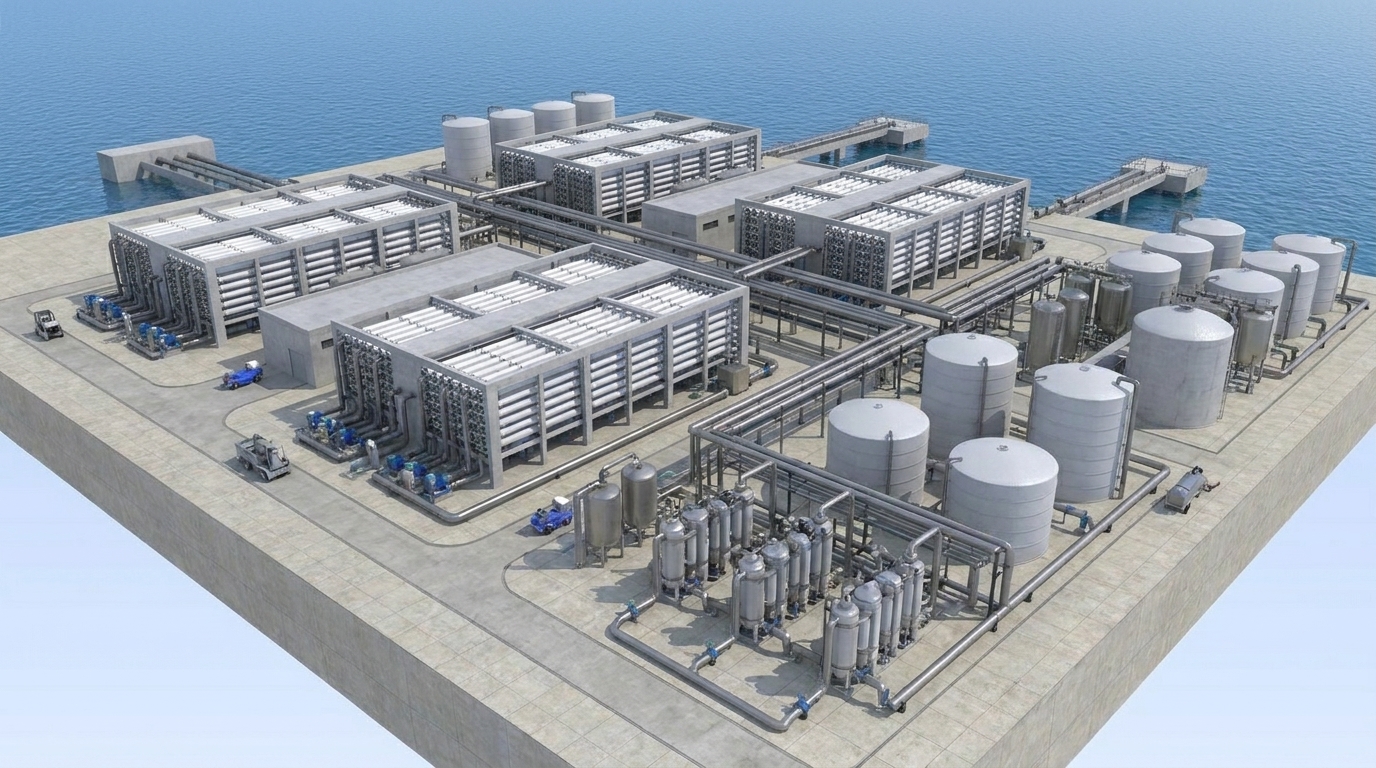
SRPEPL's desalination and SWRO track record
SRPEPL's desalination track record spans defence, community drinking water and export applications. The company has delivered over 4,000 packaged RO and UF systems and manufactures its own SWRO membrane elements in India.
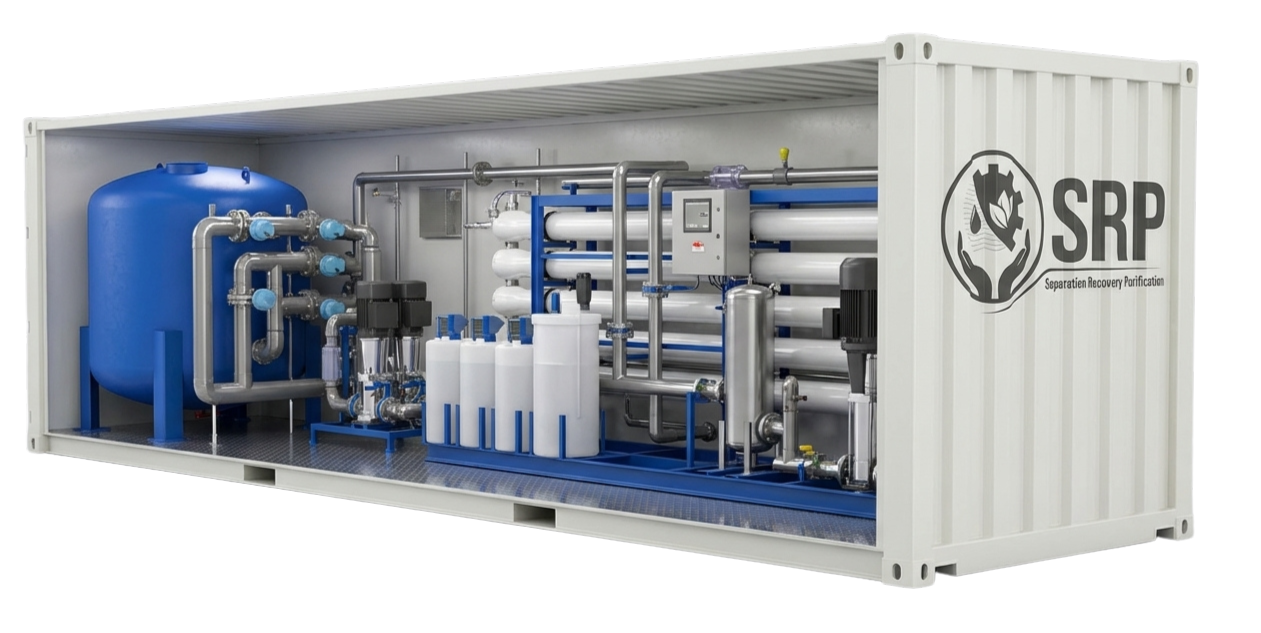
Containerised BWRO & SWRO for US Military Forward Bases
One of the most demanding procurement environments globally — requiring full supply-chain traceability, factory acceptance testing to US Department of Defense standards, and documentation that meets defence-grade QA/QC requirements.
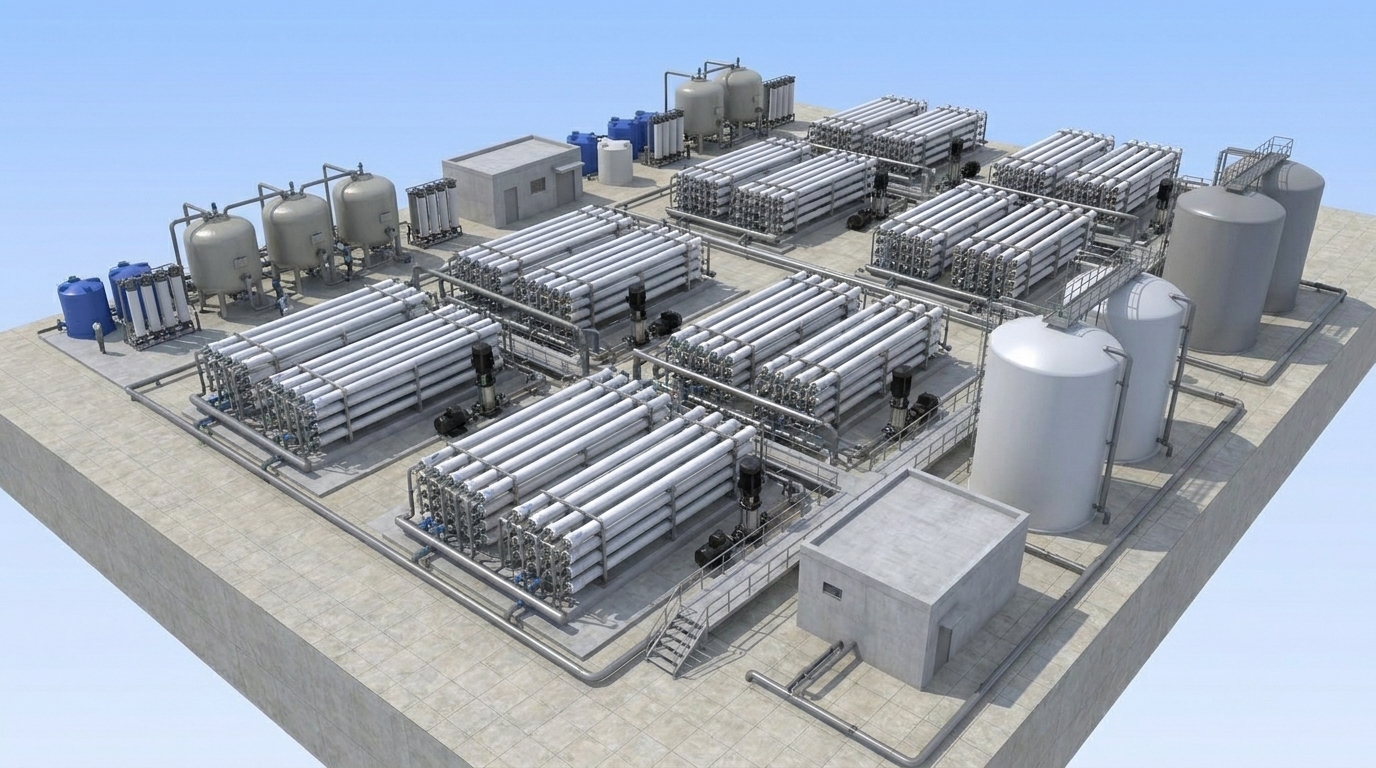
Community Brackish-Water Desalination — Thousands of Village-Level Plants
Treating high-TDS and fluoride-affected groundwater to IS 10500:2012 drinking-water standards. Full programme details on the Containerised & Skid-Mounted Water Treatment Plants page.
See containerised programme details →Compliance
Applicable standards for desalination — India and export
Desalination plant design in India follows IS 10500:2012 for drinking-water quality and CPCB/MoEF norms for brine-discharge compliance. For export markets, WHO Guidelines and country-specific regulations apply. SRPEPL designs to both depending on the destination market.
| Standard | Scope | Application |
|---|---|---|
| IS 10500:2012 | Drinking water quality specification | India — product-water quality target for community and drinking-water desalination |
| CPCB Effluent Discharge Norms 2017 | Effluent / reject discharge limits | India — brine and reject management compliance |
| MoEF CRZ Notification 2019 | Coastal Regulation Zone | India — siting of coastal SWRO intakes and brine outfalls |
| WHO Guidelines (4th ed., 2022) | International drinking-water standard | Export markets, defence applications, international tenders |
| GSO 149 | Gulf Standards Organization drinking water | GCC export — product-water quality compliance |
| US Military TB MED 577 | Water quality in field environments | Defence — KBR / US Military supply compliance |
Why SRPEPL
Why choose SR Paryavaran Engineers for a desalination project?
SRPEPL brings four specific capabilities to desalination projects: in-house SWRO membrane manufacturing, in-house pressure-vessel and skid fabrication, a proven defence-supply track record through KBR, and an international office positioned in the GCC to support export-market delivery and after-sales.
Frequently Asked Questions
Desalination and seawater RO — common questions
Seawater reverse osmosis (SWRO) forces seawater (TDS 25,000–45,000 mg/L) through semi-permeable membranes at high pressure (55–70 bar) to separate freshwater from dissolved salts. The membranes reject ≥99.5% of dissolved salts, producing permeate with TDS of 100–500 mg/L. SWRO has largely replaced thermal desalination methods (MSF, MED) in new installations because of its lower specific energy consumption — 3–4 kWh/m³ with energy recovery devices, compared to 10–15 kWh/m³ for thermal.
SWRO (seawater RO) treats seawater at TDS 25,000–45,000 mg/L and operates at 55–70 bar with 50–60% recovery. BWRO (brackish-water RO) treats lower-salinity water at TDS 500–10,000 mg/L and operates at 15–25 bar with 75–85% recovery. The higher operating pressure and lower recovery of SWRO are driven by the higher osmotic pressure of seawater. BWRO uses standard spiral-wound elements; SWRO uses high-pressure elements designed for sustained high-bar operation with higher salt rejection.
SR Paryavaran Engineers delivers desalination plants from 1 m³/hr (24 CMD) to 50 m³/hr (1,200 CMD) per unit in containerised and skid-mounted formats. Higher capacities are delivered as multi-container or multi-skid assemblies. SRPEPL has delivered over 4,000 packaged RO and UF systems, including containerised SWRO and BWRO units.
Yes. SRPEPL manufactures high-pressure seawater RO membrane elements (SRP HP series) at its facilities in Panchkula, India, under its membrane manufacturing brand SRP Membranes. The SRP HP series is designed for operation at 55–70 bar with ≥99.5% salt rejection, suitable for seawater feeds up to 45,000 mg/L TDS. SRPEPL also manufactures brackish-water RO elements (SRP BW series) for BWRO applications up to 10,000 mg/L TDS. In-house membrane manufacturing means the membrane specification is controlled within the same engineering team that designs and builds the desalination system.
A modern SWRO plant with energy recovery devices (ERDs) consumes 3–4 kWh/m³ of product water. Without ERDs, SWRO energy consumption is 5–6 kWh/m³ — ERDs recover energy from the high-pressure reject stream and reduce power consumption by approximately 40%. SRPEPL includes ERDs as standard on all SWRO configurations. BWRO energy consumption is significantly lower at 0.8–1.5 kWh/m³ because of the lower operating pressure required.
Yes. Containerised and skid-mounted BWRO plants at capacities up to ~10 m³/hr are compatible with solar photovoltaic power, either standalone with battery storage or in hybrid configuration with diesel genset backup. SWRO's higher specific energy consumption (3–4 kWh/m³) makes solar-only operation more challenging at larger capacities, but solar-diesel hybrid is viable for containerised SWRO up to 5–10 m³/hr. SRPEPL has delivered 108 solar-powered packaged RO plants for community drinking water in Maharashtra and can integrate solar power supply into desalination configurations on request.
Seawater contains suspended solids, organic matter, algae and colloidal material that foul SWRO membranes if not removed. SRPEPL uses UF (ultrafiltration) pre-treatment as standard on all SWRO systems — UF produces a consistently low SDI (<3) feed regardless of seasonal variation. Conventional pre-treatment (media filtration) is acceptable for BWRO on clean groundwater sources. The choice of pre-treatment determines membrane fouling rate, CIP frequency and membrane life — undersized pre-treatment is the most common root cause of poor SWRO performance.
Brine from SWRO contains dissolved salts removed from the feed at approximately 1.5–2× the feed TDS. For coastal plants, brine is typically discharged through a diffuser outfall into the sea, subject to MoEF CRZ Notification 2019 and local coastal authority approvals. For inland BWRO plants, brine must be managed through evaporation ponds, solar evaporation, or further concentration via reject-recovery RO or ZLD extension. SRPEPL designs brine-management systems as an integral part of the desalination scope, not as an afterthought.
SRPEPL supplies desalination plants across India and to export markets through its international office in Sharjah, UAE. In India, applications include coastal and island drinking water, community BWRO for high-TDS and fluoride-affected groundwater, industrial make-up water for coastal plants, and defence installations. Export markets served include the GCC (UAE, Saudi Arabia, Oman, Kuwait, Qatar, Bahrain), Africa (Nigeria, Kenya, Egypt, Tanzania) and Southeast Asia (Vietnam, Bangladesh, Sri Lanka). Defence desalination units have been supplied to US Military installations through KBR.
Request a desalination plant design consultation
Share your feed-water analysis (source, TDS, temperature, specific ions of concern), target product-water quality, required capacity and site constraints — our engineering team will respond with a preliminary process design, membrane array configuration and scope outline.
Related Solutions